

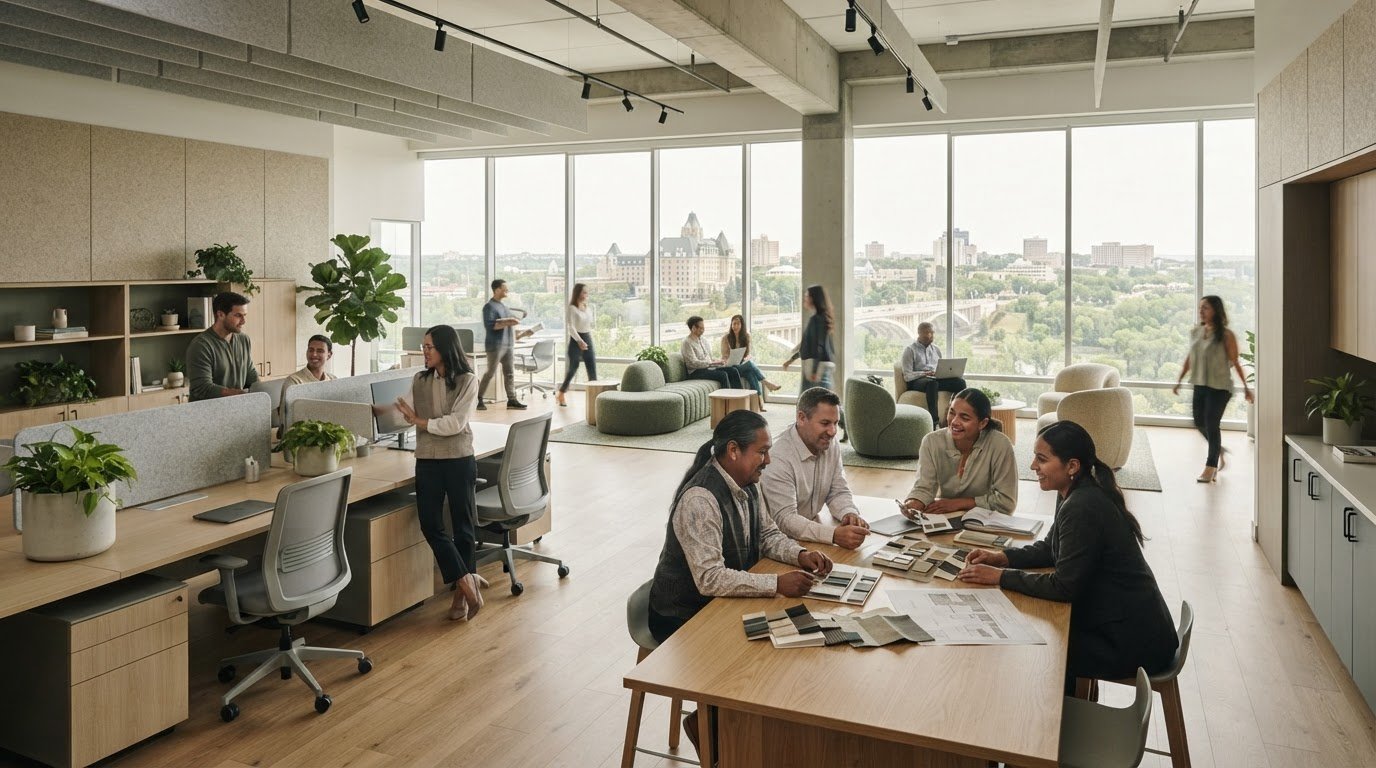
What if the right furniture plan began with how people use your commercial space, rather than with a catalogue? For Saskatoon organizations, furniture procurement for business Saskatoon projects can connect practical needs with design intent, so each selection supports the way people work, visit, or gather.
Comfort, durability, appearance, and sustainability can all inform the same plan. Space planning helps connect these priorities with furniture, fixtures, and equipment that suit daily operations and create a cohesive, welcoming environment. The result is a considered approach to furniture procurement for business Saskatoon organizations can shape around their people and purpose.
This guide explains how to define priorities, compare options, and make considered selections for a commercial space. You’ll find practical ways to weigh function, material choices, flexibility, and visual harmony, so your decisions support an environment that feels refined and works with intention over time.
Key Takeaways
- Understand what FF&E procurement covers and how it connects business needs with space planning and design intent.
- Follow a considered process from defining your business brief to selecting furniture, fixtures, and equipment.
- Compare options by function, spatial fit, durability, materials, maintenance, and visual coherence.
- Prepare essential project details before furniture procurement for business Saskatoon, while allowing design preferences to evolve.
- See how Allure LOFT Design’s commercial design and procurement services can bring comfort and productivity into a cohesive plan.
What Business Furniture Procurement Means for Saskatoon Commercial Spaces
Commercial interiors take shape through connected decisions. Furniture, lighting, storage, and equipment each serve a purpose, but their value depends on how well they support the business and the people who use the space. FF&E procurement is the considered selection of furniture, fixtures, and equipment to support a commercial space’s planned use, design intent, and day-to-day needs.
Procurement brings these decisions into a coordinated process. It connects the business brief with space planning, the desired look and feel, and the items selected for the finished interior. Rather than buying pieces as needs arise, a business can assess how each selection fits the room, works with other furnishings, and contributes to a consistent experience.
This is the central idea behind furniture procurement for business Saskatoon: align each selection with the purpose of the space. A desk suited to a work area may not be the right choice for a customer-facing setting. Planning the overall scheme helps identify differences like these before separate decisions become disconnected from the wider design.
Useful decisions start with the people and activities the space needs to support. A thoughtful plan accounts for comfort, productivity, circulation, visual harmony, and how visitors move through the environment. It can also include eco-conscious materials and practical maintenance needs, without treating appearance and function as competing priorities.
Which items fall under commercial FF&E?
FF&E groups items by their role in a commercial interior. Furniture supports work, waiting, dining, or display; fixtures contribute to the room’s function and atmosphere; equipment supports specific business activities. Office furniture provides a general overview of workplace furnishings, while each project plan considers the needs of its particular space.
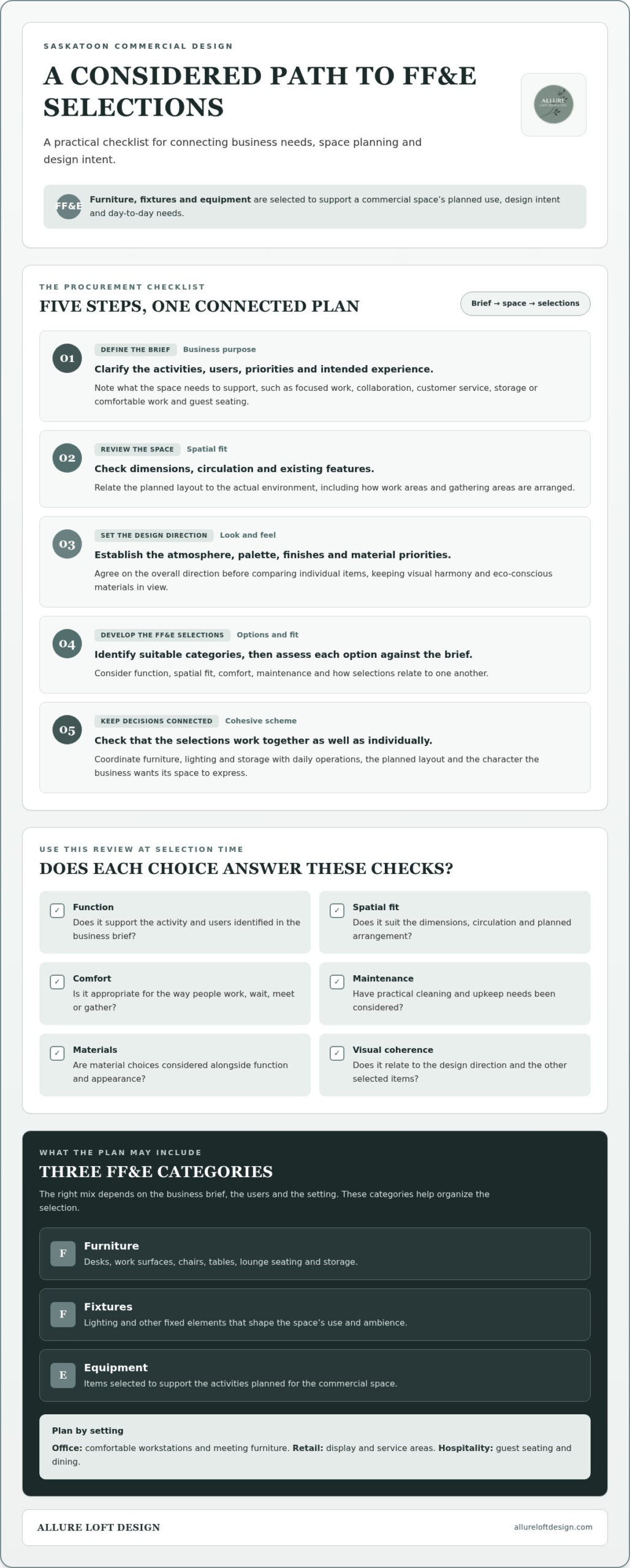
- Furniture: Desks, work surfaces, chairs, tables, lounge seating, and storage.
- Fixtures: Lighting and other fixed elements that shape use and ambience.
- Equipment: Items selected to support the activities planned for the space.
The right mix depends on the brief, the users, and the setting. An office may need comfortable workstations and meeting furniture; retail may call for display and service areas; hospitality spaces may centre on guest seating and dining. These examples are starting points, not a universal specification.
Why does procurement matter to Saskatoon businesses?
Saskatoon businesses use commercial spaces in different ways. An office needs to support focused work, collaboration, and circulation. A retail environment must accommodate browsing, service, and displays. Hospitality settings call for comfortable seating and a considered guest experience. Furniture procurement connects these uses with a cohesive layout, so selections feel intentional rather than assembled piece by piece.
When furniture, lighting, and storage work together, the environment can feel clearer and more welcoming. Comfortable furnishings and thoughtful circulation support the people using it, while consistent forms, finishes, and materials reinforce the design direction. For Saskatoon organizations, a coordinated approach provides a practical foundation for selecting FF&E that reflects daily operations and the character they want their commercial space to express.
How a Design-Led Furniture Procurement Process Takes Shape
A clear procurement process turns business needs into coordinated furniture, fixtures, and equipment choices. It begins with the commercial space and the people who use it, then moves through space planning, design direction, and considered sourcing. The project brief shapes the scope of planning and which decisions need the most attention.
For furniture procurement for business Saskatoon, professional planning connects what the space must do with what will fit and feel appropriate. This takes more than selecting attractive pieces. It means weighing use, dimensions, comfort, material choices, and visual coherence as parts of one design.
Begin with the commercial space and its users
Start by describing who uses the space, what activities take place there, and where those activities happen. Note priorities such as comfortable work or guest seating, accessible circulation, storage, focused work, collaboration, or customer service. Relate those needs to the existing or planned layout, including room dimensions and the intended arrangement of work and gathering areas.
Move from design direction to considered sourcing
With the brief in view, translate it into furniture categories, functions, finishes, and material considerations. A seating choice, for example, needs to suit its intended use and location as well as the visual direction. Eco-conscious materials can also inform selection, alongside practical needs such as cleaning and upkeep.
A design-led sequence helps keep decisions connected:
- Define the brief. Clarify the business’s activities, users, priorities, and intended experience.
- Review the space. Consider dimensions, circulation, existing features, and planned layout so selections respond to the actual environment.
- Set the design direction. Establish the desired atmosphere, palette, finishes, and material priorities before comparing individual items.
- Develop the FF&E selections. Identify suitable categories and assess options for function, spatial fit, comfort, maintenance, and how they relate to one another.
- Refine the scheme. Review the proposed selections as a whole, resolving differences between practical requirements and the intended character of the space.
This sequence is not a fixed formula. Updating one area calls for different decisions than furnishing a new commercial interior, and the project scope shapes how each stage unfolds. The interior design process offers more context on how briefing and space planning inform design decisions.
At the sourcing stage, assess candidate items against the brief rather than in isolation. This makes it easier to see whether a finish supports the design direction, a piece suits its intended users, or a selection might interrupt circulation. The goal is a considered FF&E plan, not a collection of unrelated purchases.
For a commercial interior in Saskatoon, Allure LOFT Design connects commercial design with FF&E procurement, bringing functional planning and refined sourcing into the same conversation. Explore commercial interior design and FF&E procurement to see how a design-led approach can shape your space.
How to Compare Business Furniture Options in Saskatoon
Furniture comparisons are most useful when you measure each option against the same project priorities. A striking finish may catch the eye, but the piece still needs to suit the room, its users, and the work taking place there. For furniture procurement for business Saskatoon, a simple comparison framework keeps function, material, care, and appearance in view together.
Business furniture works best when its practical use and design contribution are considered together. Compare options against your brief and intended layout using criteria such as these:
- Function: What task or activity does the item support? Consider whether it meets daily needs for work, service, waiting, display, or gathering.
- Spatial fit: Do its dimensions and configuration suit the room and planned circulation? Account for how people move around and use nearby furnishings.
- Durability: Is the item appropriate for its expected pattern of use? Review available information about construction and suitability for the setting without assuming a particular lifespan.
- Material: Do the material and finish fit the design direction and the project’s priorities, including any interest in eco-conscious materials?
- Maintenance: What care does the finish require, and does that suit the way the business maintains the space?
- Visual coherence: Does the item complement the surrounding furniture, finishes, and overall identity of the commercial space?
Which functional criteria should guide selection?
Begin with the item’s role, then test it against real use. A work surface should support the tasks planned for it; seating should suit the length and purpose of use. Compare dimensions with the space plan, including clear routes through the room and room for storage where needed. Consider likely patterns of use and care, not just appearance.
How do materials and design contribute to a cohesive space?
Materials influence a room’s visual character and its practical care. Compare finishes for how they relate to one another, suit the setting, and affect maintenance. Eco-conscious materials can be part of the discussion, with choices guided by project priorities and available product information rather than unverified environmental claims.
The setting also shapes what matters most. An office may call for a calm, focused atmosphere and furnishings suited to varied work activities. Retail furniture needs to support display, browsing, and service without interrupting movement through the store. In hospitality, seating, tables, and finishes contribute to guest comfort and the character of the experience. Each environment needs its own balance of function and visual expression.
Finally, review the selections as a group. A consistent material palette or related finishes can connect distinct zones without making every piece identical. This final comparison can reveal whether an individual item strengthens the scheme or feels out of place. Keep the brief close, and weigh each option against the same criteria before finalizing the furniture plan.
What Saskatoon Businesses Should Prepare Before Furniture Procurement
A clear starting brief helps turn furniture decisions into a plan that reflects the work, people, and character of your commercial space. You don’t need every detail resolved before design begins. Separate essential facts from ideas that can be refined, then use your priorities to guide space planning and furniture selection. For furniture procurement for business Saskatoon, this preparation makes the project’s needs easier to understand and compare.
What information belongs in a useful project brief?
Describe the business activities and the people who use the space, including employees, customers, or guests. Note the atmosphere you want to create, along with practical priorities such as comfort, productivity, storage, circulation, and accessibility needs. Gather available floor plans, relevant measurements, and details about existing furniture that may stay, move, or be replaced.
A useful checklist includes:
- Business use: The activities that happen in each area and who uses it.
- Space information: Available plans, dimensions, fixed features, and known layout constraints.
- Furniture needs: Required categories, existing pieces, and the functions new selections must serve.
- Design direction: Preferred atmosphere, colours, finishes, and visual references, if available.
- Material priorities: Any interest in eco-conscious materials, alongside practical care considerations.
These essentials give professional planning a useful foundation. A preference for a particular finish or mood can remain flexible; accurate dimensions and the intended use of each area are more fundamental to a workable plan.
How can businesses align decisions with project constraints?
Sort the brief into what must be accommodated and what can adapt. Fixed features, room dimensions, required circulation, and core business activities shape the available options. Preferences for a specific look, material, or furniture configuration may allow alternatives that preserve the design intent while fitting the space more effectively.
It also helps to rank priorities. Identify which needs are essential for daily function, which contribute most to comfort, and which express the desired visual direction. Then group furniture requirements by area or activity. This gives each selection a clear purpose and helps prevent attractive but unsuitable items from distracting from the project’s needs.
Set a budget framework for furniture and related selections before comparing options. It can clarify where to focus and where flexibility may be needed, without assuming a fixed price or promising savings. Commercial space planning connects project priorities with the layout and decisions that shape a business interior.
With these details gathered, Allure LOFT Design connects commercial design and FF&E procurement through considered planning and sourcing. Discuss your commercial furniture procurement needs and begin shaping a space around your business and the people who use it.
Furniture Procurement for Business with Allure LOFT Design
Allure LOFT Design is a Saskatoon-based interior design firm offering commercial interior design and FF&E procurement. Its work brings space planning and considered sourcing together, so furniture choices respond to the intended use of the space as well as its visual direction. This human-centred approach keeps the people who work, visit, or gather there in view throughout the design process.
Furniture procurement for business Saskatoon is most effective when it supports both the plan and the experience of using the space. Comfortable seating, functional work areas, thoughtful circulation, and a cohesive material palette can each contribute to an environment that feels purposeful and refined. Rather than impose a predetermined look, selections can be shaped around the business, its users, and the project’s priorities.
How does Allure LOFT Design connect furniture with commercial design?
Procurement connects selected furnishings with the wider design intent. Allure LOFT Design considers how each choice relates to the space plan, intended users, and activities the commercial space must support. A furniture selection is assessed not only as an individual piece, but as part of an interior where function, comfort, finish, and visual harmony work together.
Material choices can also reflect project priorities, including an interest in eco-conscious materials. Considering these alongside practical use and the desired atmosphere helps maintain a coherent design direction without treating sustainability and refinement as separate goals.
What can businesses expect from a considered design conversation?
A productive conversation begins with the space and the business behind it. Share what happens in each area, who uses it, what currently works, and what you hope to change. Plans, dimensions, details about existing furniture, and visual references can help describe the context, while preferences can continue to evolve as the design takes shape.
Recommendations are then shaped around the brief and project conditions. The discussion can clarify priorities such as comfort, productivity, storage, circulation, material direction, and the atmosphere you want to create. This connects practical requirements with a distinctive design point of view, without assuming one furniture plan suits every organization.
For a business preparing a new space or rethinking an existing one, Allure LOFT Design brings commercial design and FF&E procurement into one considered approach. Each project begins with its own needs and develops through decisions grounded in use, space, and design intent.
Explore Allure LOFT Design and start a conversation about your commercial interior and furniture procurement project in Saskatoon.
Shape the Next Chapter of Your Commercial Space
A commercial interior can evolve alongside the business it serves. As your team, services, or ways of welcoming visitors change, furniture decisions offer an opportunity to make the space more supportive and intentional. Consider what you want people to experience there, whether that means greater ease during a working day, a more welcoming first impression, or a calmer setting for conversation.
That intention can guide the next design conversation. Bring forward the opportunity you see for the space, along with a practical challenge you’d like to address. A clear point of focus gives furniture procurement for business Saskatoon a meaningful direction, while leaving room for design recommendations to respond to the character and needs of your project.
Let your commercial space reflect how your business works and the care you bring to the people who use it. Explore commercial interior design and FF&E procurement with Allure LOFT Design, and take a considered step towards the environment you envision.
Frequently Asked Questions
What does FF&E mean in commercial interior design?
FF&E means furniture, fixtures, and equipment, the movable and functional items specified for a commercial interior. The scope depends on the project: an office might include desks, task chairs, and meeting-room furnishings, while a café may need dining tables, guest seating, and service-related equipment. The acronym groups these decisions for planning, while the project brief determines which items belong in the selection.
How is furniture procurement different from buying office furniture directly?
Buying directly usually centres on a particular item or immediate need. Procurement considers how selections relate across the project, including quantities, intended use, finishes, and the established design direction. For example, furnishing several work areas may involve coordinating desk and seating choices with meeting rooms and shared spaces. This broader view helps businesses assess selections together rather than treating each purchase as a separate decision.
How much does furniture procurement for a business in Saskatoon cost?
There isn’t one standard cost for furniture procurement for business Saskatoon projects. The overall scope depends on factors such as the number and type of items, the spaces involved, selected materials, and the level of commercial design and procurement work. A useful starting point is to define which areas and furniture categories are in scope, then establish a project budget for selections. Specific pricing reflects the project’s requirements.
Can furniture procurement support a more sustainable commercial space?
Yes. Sustainability can inform selection by prompting businesses to consider material composition, product care, and whether existing furnishings can remain part of the space. Refurbished or remanufactured pieces may also suit some project briefs and design directions. Review product information when comparing options, and weigh environmental priorities alongside function, maintenance, and visual coherence. Avoid assuming a material or product is sustainable based on appearance alone.
When should a business plan furniture procurement for a renovation or new space?
Plan furniture procurement while the renovation or new-space layout is taking shape, rather than waiting until the interior is finished. Early consideration lets the design team account for furniture dimensions, circulation, storage, and how each area will be used as decisions develop. For example, a meeting-room table can affect seating capacity and movement around the room. The project scope and selections shape the process and its timing.
Does furniture procurement include commercial space planning?
Furniture procurement and commercial space planning are related, but they describe different parts of the work. Procurement focuses on selecting FF&E for the project; space planning organizes the layout around activities, users, and available dimensions. Coordinating both helps align furniture choices with how rooms need to function. Allure LOFT Design offers commercial interior design alongside FF&E procurement, bringing these considerations into the same project conversation.