
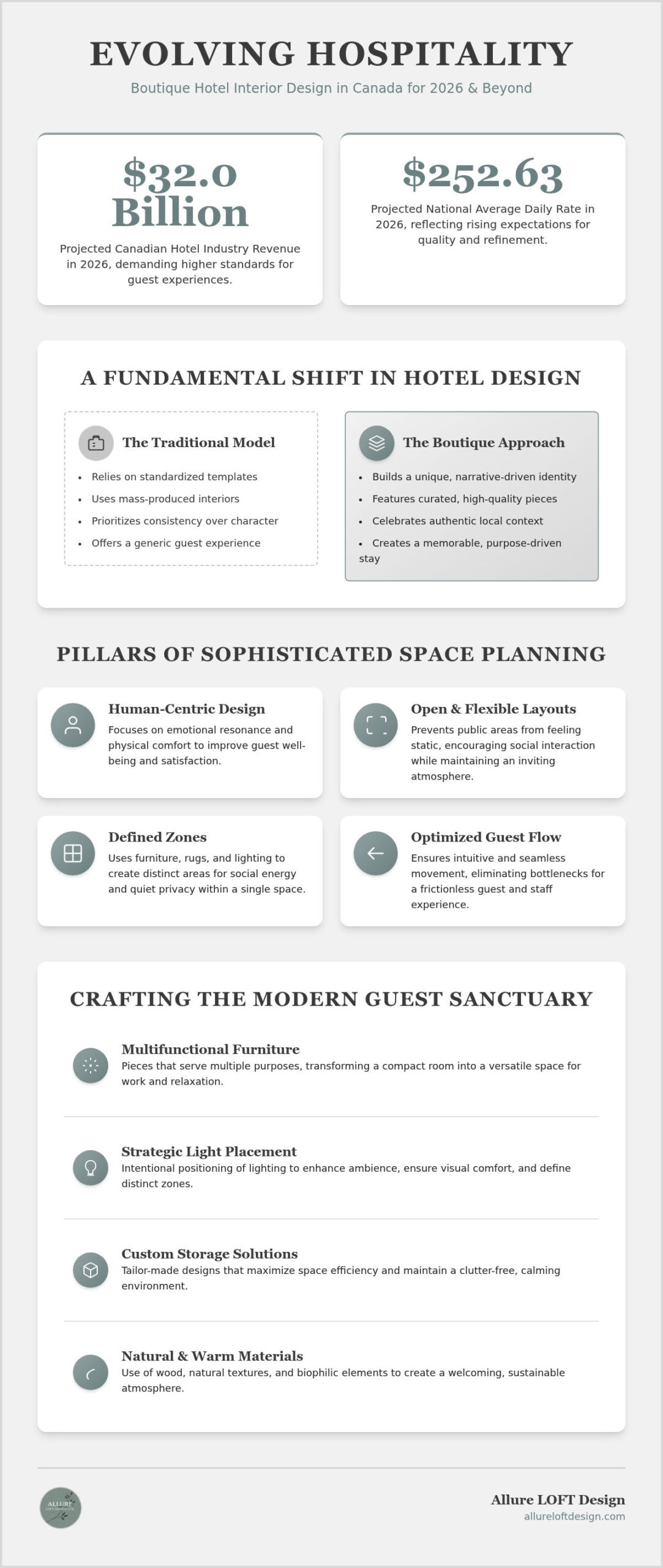
With the Canadian hotel industry revenue projected to reach $32.0 billion in 2026, the competition for guest loyalty is more intense than ever. You likely recognize the frustration of inconsistent guest feedback or the hidden costs of replacing furniture that failed to meet commercial durability standards. It’s a common struggle to find that perfect balance between a unique, curated aesthetic and the longevity required for a high-traffic hospitality environment.
This resource guide explores how professional boutique hotel interior design Canada serves as the foundation for a refined, high-ROI guest experience. We will show you how intentional FF&E procurement and professional planning can eliminate sourcing headaches while fostering a sense of harmony and comfort. By examining the 2026 regulatory landscape, sustainable material choices, and the value of a human-centric approach, we provide a clear path from initial concept to a finished, sophisticated space that guests will remember long after they check out.
Key Takeaways
- Shift from standardized hospitality to a narrative-driven approach that establishes a unique and memorable identity for your property.
- Implement open and flexible layouts with defined zones to balance social energy and guest privacy in public areas.
- Prioritize professional FF&E procurement to secure high-quality, durable pieces that define the excellence of boutique hotel interior design Canada.
- Integrate eco-conscious materials and intentional light placement to create warm, sustainable environments that thrive in the Canadian climate.
- Learn how professional planning and expert furniture sourcing provide a seamless path toward a refined and high-ROI guest experience.
Defining Boutique Hotel Interior Design in the Canadian Market
Boutique hospitality is an exercise in intentional storytelling. Successful boutique hotel interior design Canada begins with a clear narrative that distinguishes a property from the rigid templates of international chains. Defining Boutique Hotel standards involves looking beyond basic luxury to find a unique voice that resonates with the modern traveller. In 2026, guests are increasingly seeking environments that feel grounded and purposeful. They prioritize spaces that balance high-end aesthetics with carbon performance and long-term durability.
Professional planning ensures every detail aligns with a cohesive brand identity. This structured preparation transforms a standard building into a distinct destination. It’s about creating a sense of place that feels authentic to its Canadian roots, whether that’s in the urban centre of Saskatoon or a coastal retreat. By establishing this foundation, owners can move beyond generic decor to build a legacy of quality.
The Shift Toward Human-Centric Hospitality
Design is most effective when it supports human well-being. A human-centric approach focuses on emotional resonance and physical comfort. Mindful environments, characterized by natural and warm materials, have a direct impact on guest satisfaction. When a room feels like a sanctuary, it naturally improves return rates and positive reviews. Balancing modern innovation with timeless Canadian elegance allows a property to feel current without losing its soul. It’s about the harmony between the physical space and the guest’s emotional journey.
Boutique vs. Traditional Hotel Design
Traditional hotels often rely on mass-produced interiors to ensure consistency across thousands of locations. Boutique design takes the opposite path. It celebrates small-scale grandeur and intimate spaces. Every piece of furniture and every light placement is chosen with purpose. Curated experiences are the hallmark of this niche. Guests in 2026 value the textures of custom cabinetry and the unique glow of artisanal lighting over generic, off-the-shelf solutions. Boutique hotel interior design Canada is about more than just furniture; it’s about the narrative of the space.
Local context is vital for Canadian boutique properties. It isn’t enough to be beautiful; a hotel must feel like it belongs in its specific geography. This connection to the community creates a lasting impression that standardized chains simply cannot replicate. By focusing on quality over quantity, boutique owners can justify rising room rates while delivering a truly superior guest experience. With the national average daily rate reaching $252.63 in 2026, the expectations for quality have never been higher.
The Pillars of Sophisticated Hospitality Space Planning
High-performance boutique hotel interior design Canada requires a meticulous approach to how a guest moves through a property. It isn’t just about the first impression; it’s about the daily rhythm of the stay. Professional planning eliminates the awkward bottlenecks that often frustrate both guests and staff. When a layout is intuitive, hotel teams can maintain high standards with less effort while guests enjoy a seamless transition from the lobby to their private quarters. We prioritize the use of natural and warm materials to soften the edges of modern architecture, creating an immediate sense of belonging and calm.
Open and flexible layouts in public areas prevent the space from feeling static or uninviting. By focusing on the human experience, we ensure that every square foot contributes to a sense of harmony. For developers seeking a refined vision, our commercial interior design expertise ensures every square foot serves a purpose without sacrificing elegance.
Optimizing Guest Flow and Productivity
Modern travellers rarely separate work from leisure. Suites must feature multifunctional furniture that transforms from a quiet coffee station to a productive workstation. Strategic light placement is essential here to ensure visual comfort during late-night emails or early-morning reading. By integrating custom storage solutions, we keep the environment clutter-free, which directly supports a guest’s mental clarity and overall comfort. These thoughtful details transform a compact boutique room into a versatile sanctuary that meets the diverse needs of the 2026 guest.
Creating Harmonious Public Spaces
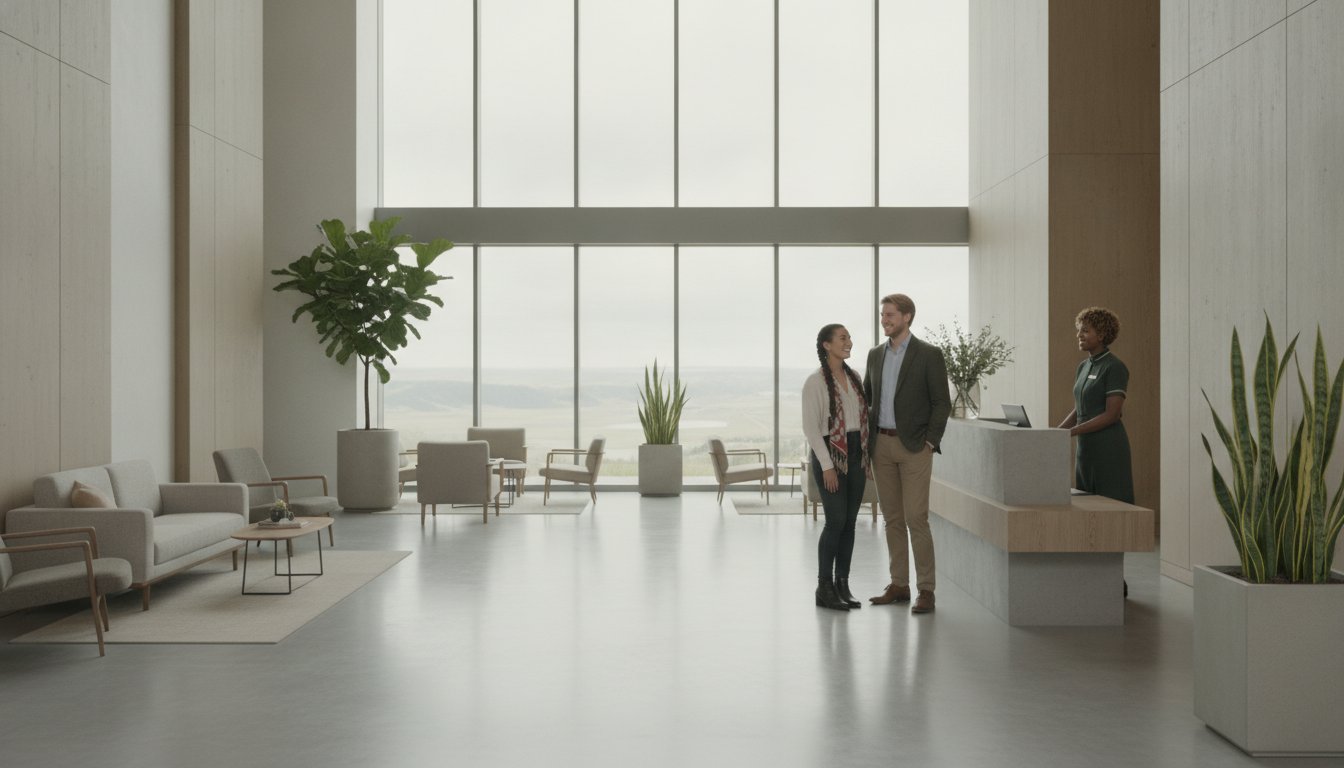
The lobby has evolved into a multi-purpose living room that serves as the heart of the hotel. By using rugs and intentional furniture placement, we create defined zones that allow for social energy and quiet privacy to exist simultaneously. Incorporating biophilic elements like indoor greenery and natural textures supports Designing for the Canadian Climate and Sustainability by improving indoor air quality and guest wellness. These public hubs become social anchors that encourage guests to linger, fostering a community atmosphere that is central to the boutique hotel interior design Canada experience. Using lighting to establish these distinct areas ensures the transition between a lively bar and a quiet co-working nook feels natural and sophisticated.
FF&E Procurement: Sourcing Quality for Canadian Hotels
Furniture, Fixtures, and Equipment (FF&E) represent the tangible soul of a guest room. While aesthetics initially draw travellers in, the durability of these elements determines long-term profitability. In 2026, the average FF&E cost for an upscale or boutique hotel room in Canada ranges between $9,000 and $18,000 per key. This significant investment requires a disciplined approach to sourcing that prioritizes commercial-grade standards over residential appeal. Professional furniture sourcing ensures that every chair, desk, and headboard can withstand the rigours of high-occupancy environments without showing premature wear.
Managing the logistics of custom cabinetry and specialized lighting is a complex undertaking. It involves more than just selecting beautiful pieces; it requires a deep understanding of supply chains and lead times. Working with a designer who manages the full procurement cycle protects the project from the 5-15% increase in material costs seen in 2026 due to manufacturing shifts. This oversight ensures that the original vision remains intact while staying within the established budget. The Interior Designers of Canada emphasizes the importance of these professional standards in maintaining industry excellence across the country.
Custom Solutions for Unique Guest Experiences
Boutique properties thrive on a one-of-a-kind feeling that guests can’t find elsewhere. Custom cabinetry in guest kitchenettes and bathrooms provides a level of refinement that mass-produced options simply cannot match. These tailored solutions maximize space efficiency in compact layouts, ensuring that every square foot feels intentional. Multifunctional furniture, such as storage ottomans or integrated desks, must be specifically engineered for commercial use to ensure guest safety. Lighting also plays a dual role. It acts as a visual focal point while serving as a functional tool for guest comfort. When these elements are curated specifically for the property, the result is a memorable environment that feels personal rather than programmed.
The Procurement Process and Project ROI
High-ROI guest experiences are built on meticulous quality control. Expert procurement ensures that every fixture meets safety and durability regulations, including the latest National Building Code of Canada updates. There’s a distinct difference between design-led procurement and the approach taken by general contractors. While a contractor focuses on installation, a design firm focuses on the harmony and longevity of the materials. This distinction is critical for boutique hotel interior design Canada projects where the brand identity is tied to the physical surroundings. By selecting timeless, high-quality fixtures, owners build a legacy that reduces maintenance costs and justifies premium room rates in a competitive market.
Designing for the Canadian Climate and Sustainability
Designing for the Canadian climate requires more than aesthetic appeal; it demands a deep understanding of environmental resilience. In regions like Saskatoon, where temperatures fluctuate dramatically, boutique hotel interior design Canada must prioritize thermal comfort and energy efficiency. By 2026, updates to the National Building Code of Canada have further integrated climate change resiliency, making professional planning essential for both compliance and guest comfort. Integrating eco-conscious materials isn’t just a trend. It’s a commitment to carbon performance that benefits both the environment and the bottom line.
Natural textures and neutral colours do more than mirror the Canadian landscape. They create a psychological sense of warmth that counters the exterior chill. Smart home integration, including automated thermostats and voice-controlled devices, has become a standard tool for managing energy consumption. These systems allow hotel operators to maintain a steady cadence of efficiency without compromising the guest experience. For developers looking to realize these goals, our renovation and new build consulting provides the expertise needed to balance utility with elegance.
Sustainable Material Selection
Resilience is a core pillar of high-quality design in the north. Flooring upgrades must be both beautiful and resilient to the salt and snow tracked in during long winters. Choosing materials that withstand these harsh realities prevents the premature wear that often plagues poorly planned hospitality spaces. The impact of natural and warm materials, such as wood finishes and stone, goes beyond durability. These elements influence guest psychology, fostering a sense of calm and order that is essential for a restful stay. Sourcing these materials locally within Canada reduces the project’s carbon footprint and supports the regional economy, a factor that 2026 guests value highly.
Lighting Design for Northern Latitudes
Short winter days present a unique challenge for boutique properties. Maximizing natural light is critical, but the strategic positioning of artificial fixtures is what truly defines the evening atmosphere. Layered lighting creates a welcoming environment similar to a family entertainment room in common areas, encouraging guests to socialise or relax. Precise light placement ensures that public spaces feel intimate rather than cavernous during the darker months. By using a mix of ambient, task, and accent lighting, we can enhance the visual comfort of the interior. This thoughtful approach to illumination transforms the hotel into a sanctuary, regardless of the weather outside.
Partnering with Allure LOFT Design for Your Hospitality Project
Allure LOFT Design, led by Amanda Loftsgard, brings a refined visionary approach to the hospitality sector. Based in Saskatoon, we understand the specific challenges of Western Canadian projects, from climate resilience to the local market’s desire for authenticity. Our team specializes in transforming complex design needs into clear, beautiful outcomes that resonate with guests. We believe that boutique hotel interior design Canada is at its best when it reflects a human-centric philosophy, balancing high-end luxury with approachable warmth. This methodical approach ensures that every guest touchpoint, from the custom cabinetry in the suite to the light placement in the lobby, feels deliberate and polished.
A Collaborative Design Journey
The path to a successful hotel project begins with early design consultation. Whether you’re planning a new build or a full-scale renovation, professional planning ensures every decision is backed by logic and purpose. We work closely with you to realize your brand story through curated interior styling that feels intentional and unique. Our focus on longevity means we prioritize high-quality fixtures and finishes that withstand the test of time. By managing the full FF&E procurement cycle, we ensure that your vision is executed with meticulous attention to detail, maintaining a 5 out of 5 rating for excellence and reliability. This collaborative journey moves beyond simple aesthetics to create a sense of calm and order that guests will feel the moment they arrive.
Next Steps for Your Boutique Hotel
Investing in professional design is a strategic move that delivers a clear ROI. A well-crafted environment justifies premium room rates and fosters the guest loyalty that drives long-term success. Our disciplined approach to boutique hotel interior design Canada distills your complex requirements into a steady, harmonious narrative. We invite you to define your project vision through a collaborative process that values your personal narrative and business goals. We don’t just provide creative ideas; we offer a stabilizing force that guides you from the initial concept to the final procurement of every furniture piece and accessory. For those ready to move forward, our structured commercial space planning Saskatoon process provides a clear five-step framework from site analysis to handover, ensuring your project stays on schedule and on vision.
Schedule your professional planning session with Allure LOFT Design to begin your property’s transformation into a refined hospitality destination.
Shaping the Future of Canadian Hospitality
The evolution of the hospitality industry in 2026 demands a departure from generic luxury toward intentional, narrative-driven environments. Successful boutique hotel interior design Canada requires a disciplined harmony between aesthetic vision and operational reality. By prioritizing human-centric space planning and sustainable material selection, you create a sanctuary that resonates with the modern traveller while withstanding the unique challenges of the northern climate. These thoughtful decisions ensure that your property remains a high-ROI asset for years to come.
As a Saskatoon-based leader in the industry, Allure LOFT Design combines a 5/5 star professional rating with specialized FF&E procurement expertise to transform complex visions into refined guest experiences. We focus on the meaningful impact of every fixture and finish, ensuring your property stands as a testament to quality and longevity. Whether you are embarking on a new build or a thoughtful renovation, the right partnership ensures your project remains both aspirational and grounded in purpose. Your property has a story to tell; let’s ensure it is told with elegance and precision.
Elevate your hospitality project with Allure LOFT Design and begin the journey toward a space that truly inspires.
Frequently Asked Questions
What is the importance of FF&E procurement in boutique hotel design?
FF&E procurement serves as the backbone of a hotel’s physical guest experience and long-term profitability. It ensures that every item, from custom cabinetry to lighting, meets commercial durability standards while maintaining a refined aesthetic. Professional sourcing prevents the premature wear often seen with residential-grade pieces. By managing the full procurement cycle, we protect owners from supply chain delays and material cost increases, ensuring the project stays on budget and on vision.
How does interior design for small business differ from large hotel chains?
Boutique hotel interior design Canada focuses on creating a unique, narrative-driven alternative to the standardized templates used by global chains. While large hotels prioritize brand consistency across thousands of locations, boutique properties emphasize a sense of place and local authenticity. This approach uses curated interior styling and high-quality finishes to build a memorable brand identity. It allows small business owners in Saskatoon to offer a human-centric experience that justifies premium room rates.
Why should I hire a design consultant instead of a general contractor for my hotel interior?
Hiring a design consultant ensures that the project is led by a refined visionary who prioritizes aesthetic harmony and guest comfort. While a general contractor manages the physical build, a designer focuses on professional planning and the meaningful impact of the environment. At Allure LOFT Design, we provide project guidance from concept to FF&E procurement but don’t offer general contracting services. This distinction allows us to maintain an uncompromising standard for quality and detail.
Can interior design for new construction improve a hotel’s energy efficiency?
Interior design for new construction plays a vital role in enhancing a hotel’s energy efficiency and sustainability. Through smart home integration, such as automated thermostats and voice-controlled devices, we can significantly reduce carbon performance. Strategic light placement and the use of eco-conscious materials also contribute to a building’s thermal comfort. These decisions align with the 2026 National Building Code updates, ensuring your property is both environmentally responsible and cost-effective to operate.
What are the current boutique hotel design trends in Canada for 2026?
The 2026 landscape for Canadian boutique hotels is defined by value-forward luxury and climate resilience. Owners are moving toward multi-functional public spaces that serve as social hubs and co-working zones. There’s also a deeper focus on guest wellness, which includes acoustic planning and high-performance blackout window coverings. Sustainability isn’t a secondary feature; it’s integrated into the core design through the selection of locally sourced, durable, and natural materials that resonate with guests.
How do you balance luxury aesthetics with commercial durability standards?
Balancing luxury with durability requires the selection of high-performance, commercial-grade materials that offer a premium look. We choose fabrics and finishes that can withstand high-traffic use while still feeling soft and welcoming to the touch. This approach ensures that your investment in boutique hotel interior design Canada remains visually stunning for years. It’s about finding the harmony between modern innovation and timeless elegance, ensuring every fixture meets rigorous commercial interior decor safety standards without sacrificing beauty.
Is smart home integration necessary for modern boutique hotels?
Smart home integration is increasingly essential for modern boutique hotels to meet guest expectations for convenience and efficiency. Systems that control lighting and climate not only improve guest comfort but also provide significant energy savings for the operator. In 2026, guests expect intuitive technology that enhances their stay without feeling intrusive. These solutions support a mindful environment where technology serves the human experience, creating a truly sophisticated stay that feels both modern and deeply personal.
How much should I budget for professional planning fees in Canada?
Professional planning fees in Canada aren’t standardized and vary based on the project’s scope and complexity. Fees can be structured as a fixed amount, a percentage of the total project cost, or a per-key rate for hotel rooms. This flexibility allows hospitality owners to choose a model that best aligns with their budget and goals. Investing in professional expertise early prevents costly errors during the construction phase and ensures a higher ROI through a more refined guest environment.