

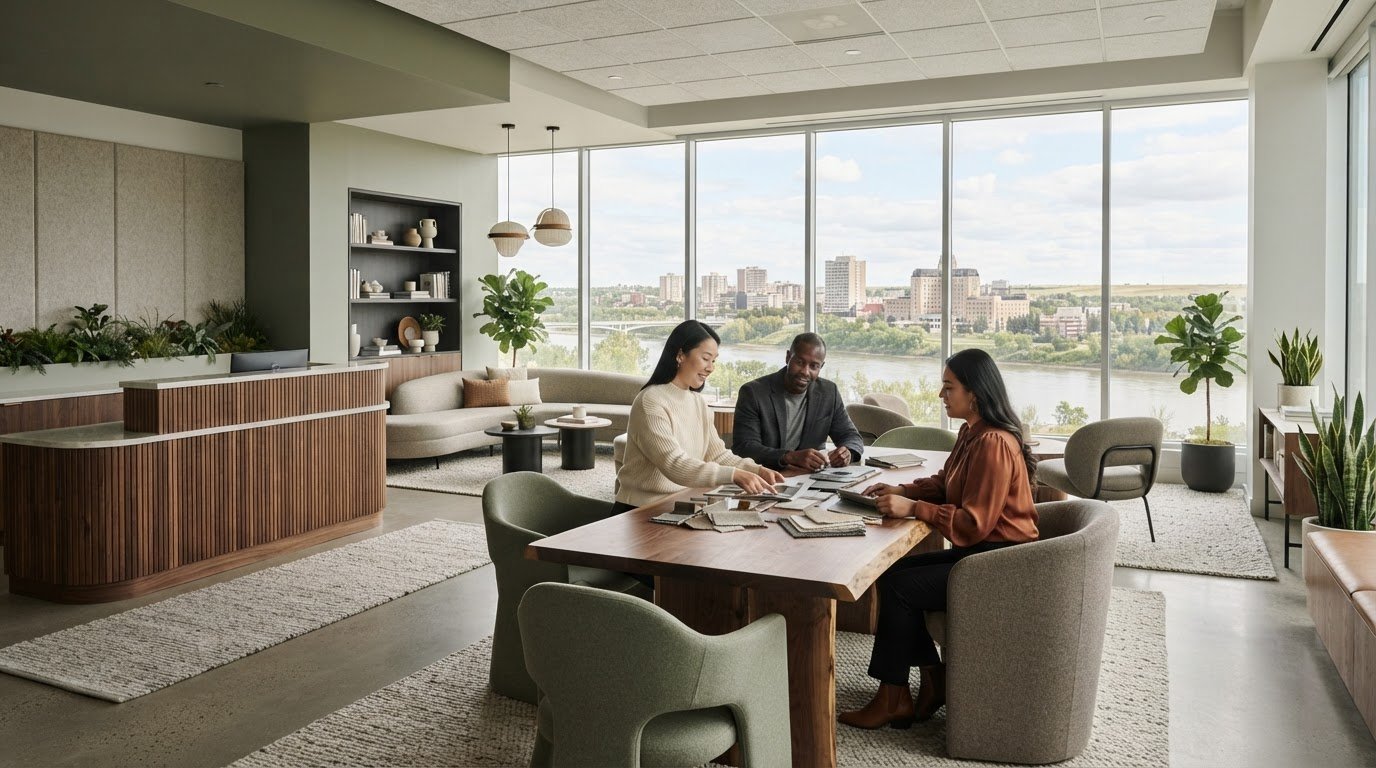
What if the furniture, lighting, and equipment in your commercial space felt like part of one considered design, rather than a series of separate decisions? A reception chair may suit the budget and a pendant may look appealing on its own, yet both can feel out of place if they do not suit the layout, daily activities, or overall design direction. FF&E procurement services Saskatoon businesses engage can bring those choices into alignment.
Good procurement translates design intent into a coordinated, usable environment. It involves more than choosing furnishings: each selection should suit its setting, support the people using the space, and relate to the other elements around it.
This article explains what FF&E procurement can include, where it fits in a commercial project, and how thoughtful sourcing supports space planning and a cohesive result. It also covers eco-conscious material considerations and practical ways to prepare for a project conversation with Allure LOFT Design, a Saskatoon-based studio offering FF&E procurement and commercial interior design.
Key Takeaways
- Learn how a coordinated FF&E scope differs from selecting furniture, fixtures, and equipment one item at a time.
- Follow a design-led process from defining user needs and design direction to sourcing and reviewing selections.
- Compare independent purchasing with professional procurement to decide where your team may benefit from design coordination and sourcing support.
- Prepare a practical brief covering users, activities, space requirements, durability, maintenance, and eco-conscious material priorities.
- See how FF&E procurement services Saskatoon businesses can draw on connect curated furniture and lighting with commercial design intent.
What FF&E Procurement Services in Saskatoon Bring to a Commercial Space
Choosing a desk, pendant light, or reception chair one at a time is different from planning how those items will work together across a commercial space. A coordinated FF&E scope considers the project as a whole: what the space must support, how people will move through it, and how each selection contributes to the intended design. Procurement is the process of sourcing goods to meet defined needs; Procurement offers a general overview of the practice.
For a business, that means weighing more than appearance. Each selection should suit its location and intended use, fit the spatial plan, and relate to the other elements. FF&E procurement services Saskatoon businesses consider can connect those practical decisions to a clear design direction, instead of leaving furnishings and lighting to feel like separate additions.
What furniture, fixtures, and equipment can include
Furniture includes the pieces people use throughout the day, such as reception seating, office work surfaces, and storage for supplies. Fixtures can include elements attached to or integrated into a space, with lighting as one example. Pendants, wall lights, and task lighting each affect how an area feels and functions. Equipment refers to project-specific items that support business activities, such as point-of-sale equipment in a retail setting or appliances in a café. The scope depends on the space and its purpose.
Together, these categories shape how people experience a workplace, shop, or hospitality setting. Comfortable waiting-area seating, for instance, can make a reception space more welcoming, while well-positioned task lighting can make a work surface easier to use. The aim is to select items in response to how the commercial space will function, not in isolation.
Why procurement belongs in the design conversation
Scale and placement matter. A large meeting table may serve a team well but restrict circulation if the layout does not leave enough room to move around it. Storage can keep frequently used materials close at hand, while its position affects access and the visual balance of the room. This is where FF&E choices meet commercial space planning in Saskatoon: furniture needs to respond to the floor plan and the activities taking place within it.
Materials, finishes, and light placement also influence how selections relate to one another. A shared palette can create continuity across different zones, while contrast can help distinguish reception from focused work areas. Consider durability and maintenance alongside colour, texture, and form. Eco-conscious materials may also be part of the project priorities, with each product assessed against the goals set for the space.
Thoughtful selections can support comfort and productivity when they respond to real tasks, movement, and visual needs. They do not guarantee a particular outcome, but they give design decisions a practical basis. The result is a clearer connection between what the space is meant to do and the furnishings, fixtures, and equipment chosen for it.
How Design-Led FF&E Procurement Moves from Intent to Selection
A considered procurement process turns the purpose of a commercial space into clear decisions about what belongs in it. Each stage responds to users, layout, and project scope, so selections are not made on appearance alone. For Saskatoon businesses, FF&E procurement services Saskatoon can connect the design direction with a structured review of furniture, lighting, and other project needs.
The sequence can be tailored to the project. These stages provide a useful framework, not a fixed checklist: the level of detail depends on the space, its intended use, and the decisions that need coordination. For broader context on how design work progresses from early discussions through planning, see the interior design process.
Start with the people and purpose of the space
Begin by describing who will use the space and what they need to do there. An office may need areas for focused work, meetings, and informal conversation. A customer-facing space may need a clear welcome point, accessible circulation, and comfortable seating. Consider comfort, storage, daily routines, and how people will move between zones. A focused brief records these priorities and connects later choices to the way the space will be used.
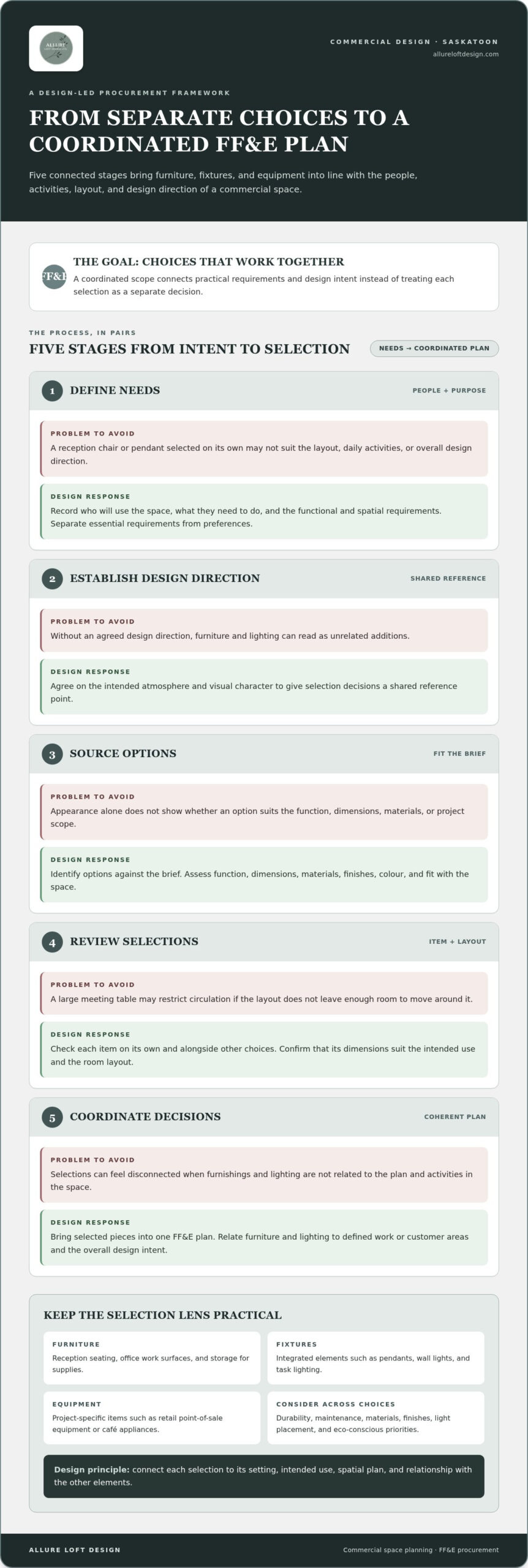
From that foundation, design-led procurement typically moves through five connected stages:
- Define needs. Gather the activities, users, functional priorities, and spatial requirements that will shape the FF&E scope. Separate essential requirements from preferences.
- Establish design direction. Agree on the intended atmosphere and visual character. This gives furniture and lighting decisions a shared reference point.
- Source options. Identify suitable possibilities in response to the brief and project scope. Assess options for function, dimensions, materials, finishes, colour, and fit with the space.
- Review selections. Consider how each item performs on its own and alongside the other choices. For example, check that a chair’s dimensions suit its intended use and leave appropriate room in the layout.
- Coordinate decisions. Bring selected pieces into a coherent FF&E plan. Relate furniture and lighting to defined work or customer areas and the overall design intent.
Turn the design direction into considered selections
Reviewing options together helps reveal whether scale, materials, colours, and finishes feel consistent across the space. It also gives the team a chance to balance practical considerations, such as maintenance and intended use, with the desired character of the interior. This comparison is more useful when the brief sets out the priorities each selection needs to meet.
That alignment matters when a project includes several functions or zones. For local business context alongside interior planning, the City of Saskatoon Business & Development resources may also be relevant to a commercial project. To explore how a design-led approach could relate to your space, visit Allure LOFT Design.
Independent Purchasing or Professional FF&E Procurement: What Changes?
Choosing how to source furnishings is a question of project fit, not a contest between approaches. A team with clear design priorities and time to manage selections may prefer to purchase independently. Professional FF&E procurement provides design coordination and sourcing support, connecting product decisions to the wider interior and helping organize the selection workload. The right approach depends on the project’s needs, scope, and the guidance the team wants.
| Consideration | Independent purchasing | Professional FF&E procurement |
|---|---|---|
| Decision ownership | The business team defines priorities and makes selections. | Selections are guided by the project brief and agreed design direction, with client decisions shaped by the project arrangement. |
| Design coordination | The team relates each purchase to the design plan and other items. | Furniture, lighting, and other selections are considered in relation to the wider interior. |
| Selection workload | Staff research options, compare details, and track decisions internally. | A designer provides sourcing and selection guidance tailored to the project’s scope. |
When independent purchasing may fit the project
Independent purchasing can suit a business with a focused brief, an established design direction, and team members able to manage research and decisions. For example, a company may have a settled palette and clear requirements for a small number of additions. Its team can assess each item against intended use, dimensions, maintenance needs, and the existing plan.
This approach does not automatically mean lower costs or a less cohesive space. Its suitability depends on the team’s capacity and the amount of coordination the project needs. The people making the selections remain responsible for checking how each purchase fits the design and function.
What designer-led sourcing adds to decisions
A designer can relate furniture and lighting choices to the broader interior, including the desired atmosphere, spatial relationships, and functional requirements. Reviewing several item categories under one design direction helps the team compare finishes, forms, and scale as parts of the same space, rather than evaluating each purchase in isolation. It also brings design expertise into decisions that might otherwise be spread across several people.
This guidance can be valuable when a project involves many selections or when the team wants support maintaining a consistent vision. It is not a universal requirement. FF&E procurement services Saskatoon businesses consider should reflect the actual brief, internal capacity, and desired level of involvement. Identify which decisions your team can confidently own and where design coordination would make the process more cohesive.
A Practical Saskatoon FF&E Brief: Needs, Materials, and Priorities
A useful FF&E brief gives the project team a shared point of reference before it compares furniture, fixtures, and equipment. It does not need to prescribe every selection. Instead, clarify who the commercial space serves, what activities it must support, and which requirements are essential. For a Saskatoon project, this practical starting point connects decisions to the actual space and its intended use.
Separate firm requirements from preferences. A clear circulation route may be essential, while a particular finish or colour may express the desired look. This distinction shows where the team has flexibility and gives sourcing decisions a consistent foundation. Budget discussions are also more useful when they account for the project’s scope and priorities, rather than relying on generic figures that may not reflect its needs.
Set functional and aesthetic priorities
Describe the activities in each area, then note what people need to carry them out comfortably. A brief might distinguish private work, meetings, customer service, and waiting, rather than treating the whole floor plan as one uniform setting. Record requirements by zone so selections respond to how each area will be used.
- Users and activities: Identify who uses each area, what they do there, and any comfort considerations that matter to the experience.
- Spatial requirements: Note circulation needs, work or customer areas, and any constraints that affect placement or access.
- Furniture and lighting: Record where seating, work surfaces, storage, and lighting are needed, and what each should support.
- Design priorities: Describe the intended atmosphere, visual character, and how comfort and productivity should be considered.
Keep essential requirements distinct from aesthetic preferences. A requirement might be suitable task lighting at a work surface; a preference might be a particular style of fixture. Naming the difference allows the design team to consider options without losing sight of the space’s purpose.
Consider material choices and project context
Assess materials in relation to their location and use. A surface in a busy customer area may face different wear and cleaning demands than one in a private office. Include expected care, maintenance, and desired longevity in the brief, then compare materials and finishes against those needs as well as the intended look.
Eco-conscious materials can also be included as a project priority. Specify what the team wants to consider, such as material origin or reuse, without assuming every choice will meet the same environmental aims. The brief should reflect the project’s priorities and the product information available during selection.
Thoughtful FF&E procurement services Saskatoon businesses can draw on begin with a clear record of users, activities, spatial needs, materials, and budget priorities. Discuss your commercial FF&E brief with Allure LOFT Design to bring those considerations into a project-specific conversation.
Allure LOFT Design FF&E Procurement Services in Saskatoon
Allure LOFT Design is a Saskatoon-based interior design firm offering FF&E procurement and commercial interior design. Its curated furniture and lighting selections can be considered as part of the wider interior, rather than as isolated purchases. The studio’s design guidance connects each decision to the purpose of the space, the needs of its users, and the project’s visual direction.
FF&E procurement services Saskatoon businesses can access support a considered approach to furnishing commercial interiors. A welcoming reception, a focused work area, and a customer-facing setting each have different functional priorities. Allure LOFT Design relates sourcing decisions to the space and project, with comfort, practical use, and visual harmony in view.
Procurement shaped around the commercial space
Good selections begin with context. The type of commercial space, the activities it needs to support, and the experience a business wants to create all inform what is considered. Furniture and lighting can be assessed in relation to the design direction, spatial needs, and intended use. This connects practical requirements with an interior that feels considered and coherent.
Allure LOFT Design provides FF&E procurement shaped around the project. A team may need guidance on specific furniture and lighting decisions, or a wider set of FF&E choices may need to be considered together. Thoughtful sourcing brings those choices into conversation with the interior design while respecting the project’s distinct priorities and preferences.
Begin with a clear project conversation
A useful first conversation can start with a few clear details. Consider preparing:
- The type of commercial space and the people who use it.
- The project goals and known functional priorities.
- Any aesthetic preferences, material considerations, or existing design direction.
- Questions about which FF&E decisions need guidance.
You do not need every selection resolved before discussing the project. A clear sense of purpose and priorities gives the conversation a practical starting point, while open questions help define where procurement guidance fits. This allows the project to be considered on its own terms, with attention to function and the atmosphere the business wants its space to convey.
For Saskatoon businesses planning a commercial interior, discuss your FF&E project with Allure LOFT Design. Share the space type, goals, and priorities to begin a project-specific conversation about furniture, lighting, and procurement guidance.
Bring Your Commercial Design Vision into Focus
Start with a focused conversation about what your space needs to make possible. Consider which decisions are already clear, where priorities compete, and how the finished environment should feel for the people who use it. These reflections give your project a practical starting point without requiring every selection to be settled in advance.
With FF&E procurement services Saskatoon businesses can explore, furniture and lighting decisions can be considered in relation to the wider project instead of left as disconnected choices. A thoughtful approach brings function and design intent into the same conversation, helping you clarify the direction you want to take.
Bring your questions, ideas, and project priorities to Allure LOFT Design. Discuss your Saskatoon FF&E project with Allure LOFT Design and take the next considered step towards a commercial space shaped around your business.
Frequently Asked Questions
Is FF&E procurement only useful for large commercial projects?
No. A smaller project, such as furnishing a meeting room or updating a reception area, can also benefit from coordinated selections. The appropriate scope depends on the decisions involved and the support a business needs. In Saskatoon, a team refreshing one defined area may focus on a limited set of items, while a larger project may require coordination across several functions. The process can be tailored to either situation.
Can FF&E procurement work with furniture I already own?
Yes, existing furniture can be considered as part of the project’s FF&E plan. Note each piece’s dimensions, condition, and current use, then assess whether it suits the intended layout and design direction. For example, a well-maintained meeting table may remain useful even if surrounding seating or lighting changes. Retaining suitable pieces can inform new selections, provided their fit is considered in the context of the space.
When should I begin planning FF&E procurement for a commercial space?
Begin during early project planning, while layout and design decisions are still developing. Some furnishings and equipment can involve manufacturing or shipping time, so leaving selections until a space is nearly ready may limit flexibility. Early discussion also lets the team coordinate item dimensions and placement with the planned interior. For a Saskatoon project, consider timing in relation to its scope, schedule, and sourcing needs.
Does FF&E procurement include interior design services?
Procurement centres on sourcing and coordinating furniture, fixtures, and equipment. Interior design considers the wider environment, including space planning and how the interior should function and feel. Allure LOFT Design provides both FF&E procurement and commercial interior design in Saskatoon, so these areas can inform one another. Procurement can support a broader design process, with the scope shaped around the project.
What information should I prepare before discussing FF&E procurement?
Bring useful information about the space, such as its floor plan, current photos, renovation or new-build plans, and a description of the people who use it. Note what is working, what needs to change, and any items you hope to retain. A preliminary budget, known project dates, and examples of interiors you like can also help frame the discussion, even if some details are still evolving.
Can FF&E choices support sustainability as well as function?
Yes, sustainability can be included as a selection priority alongside function and appearance. A project team might consider material origin, recycled content, expected service life, maintenance, and whether existing pieces can remain in use. The relevance of each factor depends on the item and the project. Review product information during selection, then weigh it against practical requirements. Eco-conscious choices can be considered, but no single material guarantees a particular environmental result.