

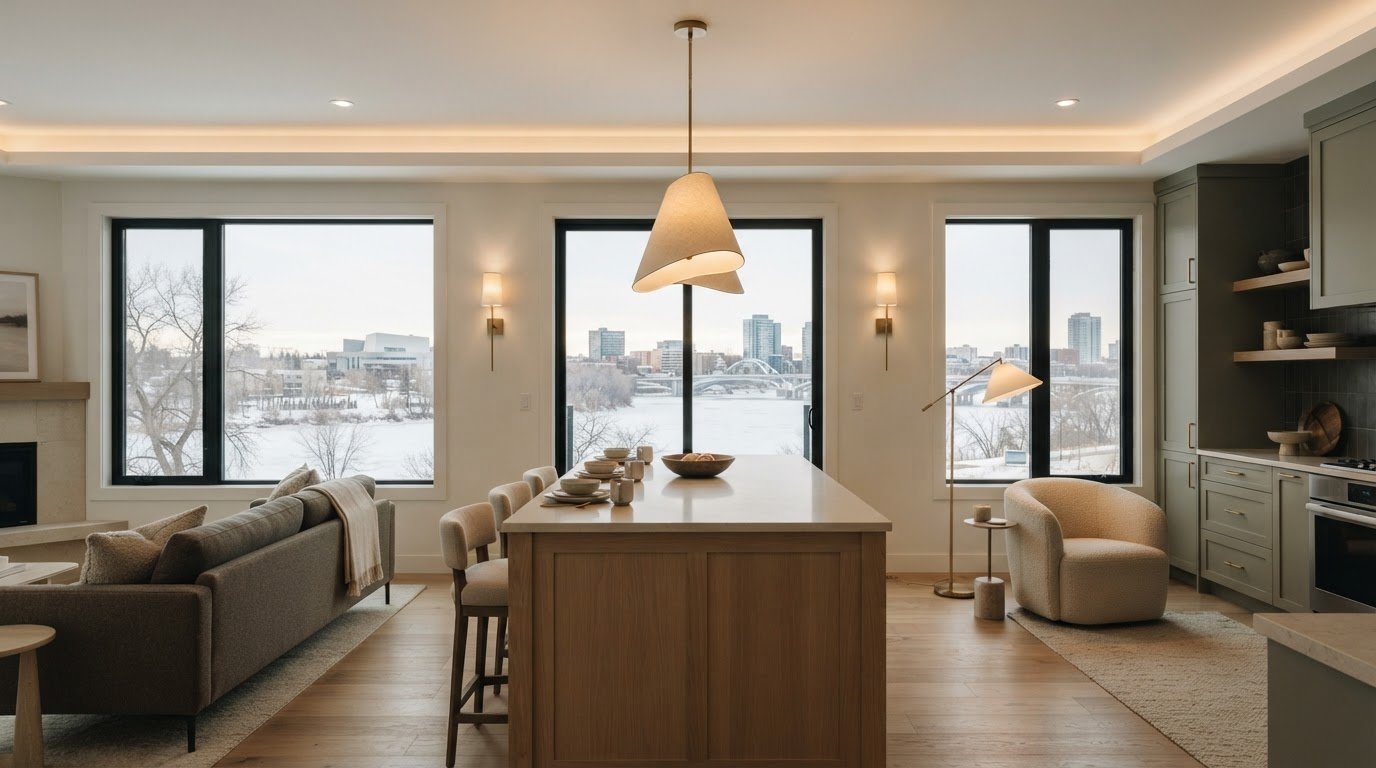
The most striking fixture isn’t always the right one for a room. A pendant can draw the eye yet leave a kitchen counter poorly lit, while a quieter choice may better support daily routines. If you’re searching for “designer lighting fixtures Saskatoon,” look beyond appearance and consider how the light will work in the space.
Form, finish, and atmosphere matter, but so do scale, placement, colour temperature, and the room’s purpose. A useful starting point is to list the activities that happen in the room, identify where clear light is needed, and note the surfaces or features you want to highlight. Then compare fixtures for light quality, fit, and compatibility, as well as style.
This guide compares common fixture options and explains what to check, from layered lighting to finishes that complement the wider interior. It also outlines how Allure LOFT Design can support lighting selection through curated retail and FF&E procurement for residential and commercial spaces in Saskatoon.
Key Takeaways
- Start with the room’s purpose, then plan ambient, task, and accent lighting around how people use the space.
- Compare pendants, chandeliers, sconces, table lamps, and floor lamps by placement, scale, light quality, and visual impact.
- Balance a focal fixture with complementary light sources for comfortable, functional lighting in Saskatoon homes and commercial spaces.
- Before choosing a fixture, record room dimensions, ceiling conditions, intended use, and existing control requirements to help confirm product compatibility.
- Allure LOFT Design supports lighting decisions through design consulting, FF&E procurement, and curated lighting retail. Confirm specific product selection and availability for your project.
Designer Lighting Fixtures in Saskatoon: Start With the Room’s Purpose
A fixture works well when it supports everyday use as well as the room’s visual character. Start by identifying what people do in the space, where they need clear light, and the atmosphere you want. This is the foundation of architectural lighting design, which considers both electric light and daylight in relation to human needs.
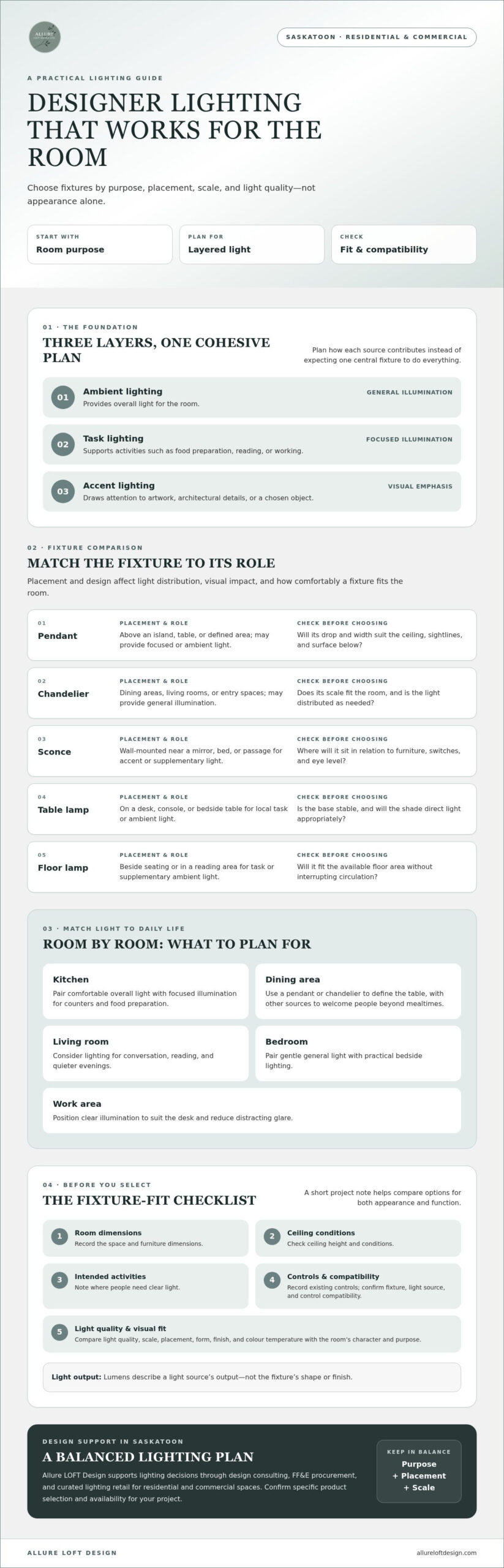
Three layers help organize a plan. Ambient lighting provides general illumination. Task lighting focuses on activities such as food preparation, reading, or working. Accent lighting draws attention to artwork, architectural details, or a chosen object. Consider how the sources work together instead of expecting one central fixture to do everything.
How should lighting support the way a room is used?
In a kitchen, combine comfortable overall light with focused illumination for counters and food preparation. In a dining area, a pendant or chandelier can define the table, while other sources help the room feel welcoming beyond mealtimes. A living room benefits from lighting for conversation, reading, and quieter evenings. In a bedroom, pair gentle general light with practical bedside lighting. For work areas, position clear illumination to suit the desk and reduce distracting glare.
Layered lighting helps a room adapt as activities change. Dimming can shift the mood without changing the layout, provided the fixture, light source, and controls are compatible. Direct useful light towards the activity and check sightlines from common seating positions to avoid uncomfortable brightness.
Which details help a fixture feel at home?
Consider scale before settling on style. A fixture that suits a spacious room may overwhelm a compact area, while a small piece can look lost above a large table. Check ceiling height, furniture dimensions, walking paths, and sightlines from nearby seats. Note where daylight enters and where shadows fall, too, since these affect the role a fixture needs to play.
Coordinate the fixture’s form, finish, and colour with cabinetry, hardware, furnishings, and other planned details. Repeating a finish can create continuity; a contrasting form can add definition in a restrained room. For more ideas on creating a cohesive interior, explore this contemporary home design guide.
When comparing designer lighting fixtures Saskatoon options, make a short project note before you shop. Record the room dimensions, ceiling conditions, intended activities, existing controls, and preferred finishes. Sharing these details with a retailer or design professional helps narrow the options based on both appearance and function.
Compare Designer Lighting Fixtures by Type, Light Quality, and Scale
Fixture type affects how light is distributed and how a room feels. Use this comparison to narrow your options, then check each product’s dimensions, light source, and control requirements before purchasing.
| Fixture | Typical placement and role | Visual impact | Questions to confirm |
|---|---|---|---|
| Pendant | Above an island, table, or defined area; may provide focused or ambient light, depending on its design. | Can create a focal point or a repeated rhythm across a surface. | Will its drop and width suit the ceiling, sightlines, and surface below? |
| Chandelier | Dining areas, living rooms, or entry spaces; may provide general illumination and a strong design statement. | Often reads as a central sculptural element. | Does its scale fit the room, and is the light distributed as needed? |
| Sconce | Wall-mounted near a mirror, bed, or passage; provides accent or supplementary light. | Adds a layer without taking up floor or table space. | Where will it sit in relation to furniture, switches, and eye level? |
| Table lamp | On a desk, console, or bedside table; provides local task or ambient light. | Brings a smaller, movable accent to a surface. | Is the base stable, and will the shade direct light appropriately? |
| Floor lamp | Beside seating or in a reading area; provides task or supplementary ambient light. | Adds vertical presence and a flexible light source. | Will it fit the available floor area without interrupting circulation? |
What do lumens, colour temperature, and colour rendering mean?
Lumens describe a light source’s output, not the fixture’s shape or finish. Colour temperature describes whether light appears warmer or cooler, which affects a room’s atmosphere. Colour rendering indicates how faithfully a source reveals colours. This can matter near artwork, finishes, or clothing. Check the product specifications for each; appearance alone does not tell you how a fixture will perform. For further context on balancing function and atmosphere, see these principles of effective illumination.
Check compatibility before committing. The fixture, bulb or integrated light source, dimmer, and controls must work together. Confirm the requirements for the specific product instead of assuming that a familiar bulb or existing dimmer will be suitable.
How do fixture proportions affect a room?
Compare the fixture’s width, drop, and mounting position with the ceiling height, nearby furnishings, and clear sightlines. A statement fixture may anchor a dining area, while lamps and sconces can add flexible light without competing for attention. Neither approach is always better. Let the room’s purpose and composition guide the choice.
Scale gives a fixture visual presence; placement determines how effectively its light serves the room. Compare designer lighting fixtures Saskatoon options against both measures. Allure LOFT Design’s lighting and FF&E procurement can help connect fixture selection with your project’s design intent.
Choose Lighting for Your Saskatoon Home or Commercial Space
The right fixture depends on who uses the room, what they do there, and how the space should feel. A homeowner may prioritize a calm atmosphere for evenings and flexible light for reading or meal preparation. A business may need a consistent experience for customers, comfortable working conditions for staff, and fixtures that suit its cleaning and maintenance routines.
A focal fixture can give a room a clear point of interest, such as a pendant above a dining table or a statement piece in a reception area. One source may not serve every activity, though. Complementary fixtures can spread light across work surfaces, seating, and circulation areas, while offering flexibility for different uses. Weigh visual impact against function, upkeep, and how each source fits the wider interior.
For either setting, look into materials, durability, repairability, and energy use instead of assuming these qualities based on appearance. Ask what product documentation is available, whether components can be replaced, and what care the finish requires. In Saskatoon, planning the lighting alongside the wider interior can also help align local sourcing with other project decisions.
What should homeowners consider when selecting fixtures?
Start with household routines, comfort, existing finishes, and planned furnishings. A dining area may need a fixture that defines the table, while a living room may call for separate sources for conversation, reading, and quieter moments. Layered lighting lets the atmosphere adapt as activities change. For new build timing and design coordination, see the early interior design consultation guide.
What should businesses consider for commercial design?
In retail, lighting can help establish the intended brand experience and support how customers move through the space. In an office, consider staff tasks, visual comfort, and how light works across shared and individual areas. Before confirming a specification, ask about maintenance needs, control compatibility, and product documentation. If fixture locations depend on the layout, explore commercial space planning in Saskatoon as part of your planning.
For designer lighting fixtures Saskatoon projects, an interior design professional can relate fixture choices to room function and the wider scheme. Allure LOFT Design offers commercial and residential interior design, lighting, and FF&E procurement in Saskatoon. Confirm product selection and availability for your project.
A Saskatoon Lighting Buying Checklist Before You Commit
Preparation can help prevent a fixture from becoming an awkward fit or an impractical choice. Before comparing designer lighting fixtures Saskatoon retailers or procurement resources may offer, gather the room details and product information you’ll need to make a considered decision.
- Define the room’s needs. Note who uses the space, what activities take place there, and the atmosphere you want the lighting to support.
- Record the room and ceiling conditions. Measure the room, intended fixture location, and nearby furnishings. Note ceiling height, ceiling type, existing junction box location, and any features that may affect mounting or clearance.
- Describe the intended light. Identify whether the fixture should provide general, task, or accent lighting, and consider how it will work with other light sources.
- Set a project budget. Decide what you can allocate to the fixture, then ask the seller to clarify the quoted product price and any ordering or delivery terms. Don’t assume a displayed price covers every project requirement.
- Verify the product details. Confirm dimensions, materials, finish, available product documentation, and whether the fixture accepts the intended bulb or has an integrated light source.
- Check controls and ordering conditions. Confirm compatibility with your existing or planned dimmer and controls. Ask the seller to verify availability, lead time, delivery details, and return terms before placing an order.
- Confirm what happens next. Clarify who is responsible for installation and any required project coordination. Design consulting and procurement can guide fixture selection; installation is a separate project requirement to confirm with the appropriate professional.
Which questions should you ask before purchasing?
Ask for confirmed measurements and finish details rather than relying on a photograph or a general product description. Request documentation to help assess the fixture’s light source and compatibility with bulbs or controls. Before ordering, confirm availability, timing, delivery arrangements, and return conditions directly with the seller. Keep the answers with your project notes.
When can professional planning make selection clearer?
A designer can relate fixture choices to space planning, finishes, and furnishings, helping keep the selection coherent with the wider interior. Allure LOFT Design offers design consulting and FF&E procurement. Coordinate installation separately with the appropriate professional. If you’re weighing options for a Saskatoon home or commercial space, discuss your lighting and project needs with Allure LOFT Design.
Source Designer Lighting Fixtures in Saskatoon With a Clear Plan
Good sourcing begins with a clear brief. Revisit the room’s purpose, the quality of light you need, the fixture’s scale, and compatibility with existing or planned controls. Then consider how the selection fits the wider interior and where it can be sourced. This keeps visual appeal connected to comfort and everyday function as you compare designer lighting fixtures Saskatoon options.
Local design guidance can help turn those priorities into a cohesive selection. Allure LOFT Design is a Saskatoon-based residential and commercial interior design firm offering design consulting, Furniture, Fixture & Equipment (FF&E) procurement, and curated retail that includes lighting. Product selection and availability depend on the project, so confirm details before making a decision.
How can design and procurement support fixture selection?
Lighting is one part of an interior scheme. A designer can consider how a fixture relates to the room’s finishes, furnishings, layout, and intended atmosphere. Procurement connects the design direction with sourcing. This can be useful when lighting is selected alongside other furnishings or as part of a residential or commercial project. Confirm the products being considered and their availability for your project.
What should you prepare for an initial conversation?
Gather a few details to make the discussion more focused:
- Room dimensions, ceiling details, and photographs from more than one angle.
- Existing plans or notes on planned renovations, furnishings, and finishes.
- Your project timing and any known decisions that may affect fixture selection.
- A short description of your priorities for comfort, function, style, and sustainability.
These details help clarify how lighting can support the space, whether you’re planning a home update, a new build, or a commercial interior. They also provide context for discussing sourcing and procurement without assuming a particular product or project outcome.
For a considered next step, contact Allure LOFT Design through its website to discuss your residential or commercial lighting project in Saskatoon.
Choose Lighting That Works Beautifully Every Day
Good lighting brings room purpose, light quality, scale, and compatibility into alignment. A considered mix of sources can support daily activities while creating a calm, cohesive atmosphere. Before choosing among designer lighting fixtures Saskatoon options, confirm the fixture’s dimensions, materials, light source, and control compatibility, then consider how it relates to the wider interior.
Local design guidance can connect practical decisions with your home or commercial space. Allure LOFT Design serves residential and commercial clients in Saskatoon, offering FF&E procurement and curated lighting retail. Product selection and availability depend on the project, so confirm details as you plan.
Bring room dimensions, photographs, plans, and priorities for comfort, function, style, and sustainability to the conversation. Discuss your lighting project with Allure LOFT Design and take a thoughtful next step towards a space that feels refined and useful.
Frequently Asked Questions
Where can I find designer lighting fixtures in Saskatoon?
You can explore local lighting retailers and design resources in Saskatoon, including Allure LOFT Design, which offers curated lighting retail and FF&E procurement. Product selection and availability can vary, so contact the seller to confirm what can be sourced for your project. Before comparing options, prepare room dimensions, ceiling details, preferred finishes, and the purpose of the lighting.
How do I choose the right size lighting fixture for a room?
Choose a fixture that suits the room, ceiling height, furnishings, and intended light placement. Measure the area where it will hang or sit, then consider how its width and drop affect sightlines, circulation, and visual balance. For a fixture above a table, compare its dimensions with the table and surrounding space. Confirm product measurements and mounting requirements with the seller before purchasing.
What is the difference between lumens and colour temperature?
Lumens measure the amount of light a source produces, while colour temperature describes whether that light appears warmer or cooler. They answer different questions: how much light is emitted and what atmosphere it creates. A fixture’s appearance does not confirm either specification. Check the product details and consider how the light will work with the room’s finishes, activities, and other light sources.
Are designer lighting fixtures suitable for commercial spaces?
Yes, designer fixtures can suit commercial spaces when their appearance is balanced with the needs of customers and staff. Consider the activities in each area, visual comfort, maintenance requirements, controls, and how lighting supports the intended experience. Ask the seller for product documentation and confirm that the fixture suits the project’s use. Allure LOFT Design offers commercial interior design and FF&E procurement in Saskatoon.
Can I use a dimmer with any lighting fixture?
No. Dimming depends on compatibility between the fixture or light source, the dimmer, and the control system. Some products may not support dimming, while others may require specific compatible controls. Check the manufacturer’s product information and confirm the setup with the seller before buying. If you’re updating existing lighting, note the current controls and share those details when checking compatibility.
How much should I budget for designer lighting fixtures in Saskatoon?
There isn’t one reliable budget for every fixture. The amount depends on the product, materials, scale, light source, and project requirements. Confirm Allure LOFT Design’s pricing directly. Set a project allowance, compare current quotes from sellers, and clarify what each quote includes. Ask about ordering, delivery, and return terms so you can assess the full purchasing commitment.
Can an interior designer help me source lighting fixtures?
Yes. An interior designer can connect fixture selection with space planning, finishes, furnishings, and the room’s intended use. Allure LOFT Design serves residential and commercial clients in Saskatoon and offers design consulting, FF&E procurement, and curated lighting retail. Product choices and availability depend on the project. Share your room dimensions, photographs, plans, and priorities to begin a focused discussion.