

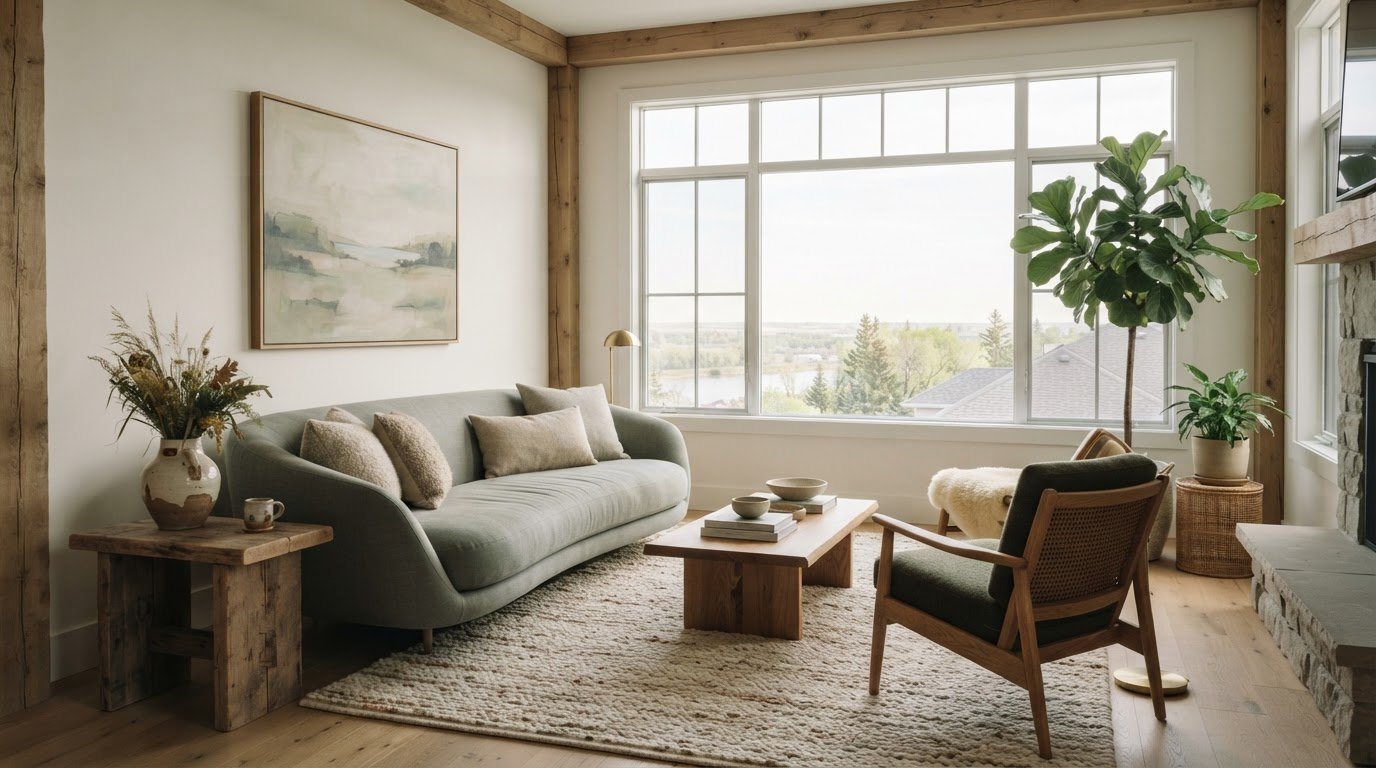
Distinctive rooms come from considered choices, not matching every piece. For unique home decor in Saskatoon, bring together furniture, art, vintage finds and accessories that suit your home and the way you live. A thoughtful mix adds character and function while keeping the space personal.
Finding pieces that feel personal and work with your home’s layout, comfort and everyday needs can be challenging. A considered selection creates visual interest while maintaining a sense of harmony.
Learn how to bring these elements together, from choosing furniture and art to balancing vintage finds with newer accents. Space planning and practical details can help shape a distinctive Saskatoon home.
Key Takeaways
- Combine furniture, art and vintage pieces to give a room character while keeping its overall look harmonious.
- Choose new accessories for their colour, texture and practical role, rather than adding accents without a clear purpose.
- Assess décor prices by considering the type of piece, its materials and the level of craftsmanship.
- Plan where you’ll browse around your preferred neighbourhoods, and consider how each find will suit your home’s layout.
- For coordinated selections across a project, explore how FF&E procurement can support the fit between furnishings, fixtures and the space.
Curated home goods, furniture, art and vintage pieces
A distinctive room often begins with one considered piece, not a matching set. In Saskatoon, combine furniture, art, vintage finds and household accents around a clear purpose. A reclaimed wooden stool, for example, can add texture beside a streamlined sofa, while a print can introduce colour without competing with larger furnishings. Aim for a thoughtful mix that supports daily life and feels personal.
Start with the room’s function and dimensions before choosing individual pieces. Measure the wall, doorway and intended furniture footprint, then note how people move through the space. In a condo living room, a compact side table can provide a landing spot without interrupting circulation. In a larger room, a substantial vintage cabinet can anchor a wall and offer useful storage. These measurements help you judge whether a compelling find suits its setting or overwhelms it.
Mid-century-inspired furniture brings clean profiles and visual simplicity to many interiors. Treat the style as a reference, not a reason to furnish every room alike. Pair a sculptural chair with a contemporary lamp, or balance tapered furniture legs with a soft-textured rug. Gus* Modern is one reference point when comparing mid-century-inspired furniture. Assess each piece by its scale, finish, comfort and relationship to existing furnishings, rather than relying on a style label alone.
Art and vintage objects give a room a more personal point of view. A Saskatchewan landscape print can connect an interior to its setting, while a small framed work can add interest to a reading corner. For a collected look, vary the scale of frames and objects, then repeat a colour or material. A vintage wooden stool beside a contemporary chair creates contrast; echoing its wood tone elsewhere helps the arrangement feel intentional.
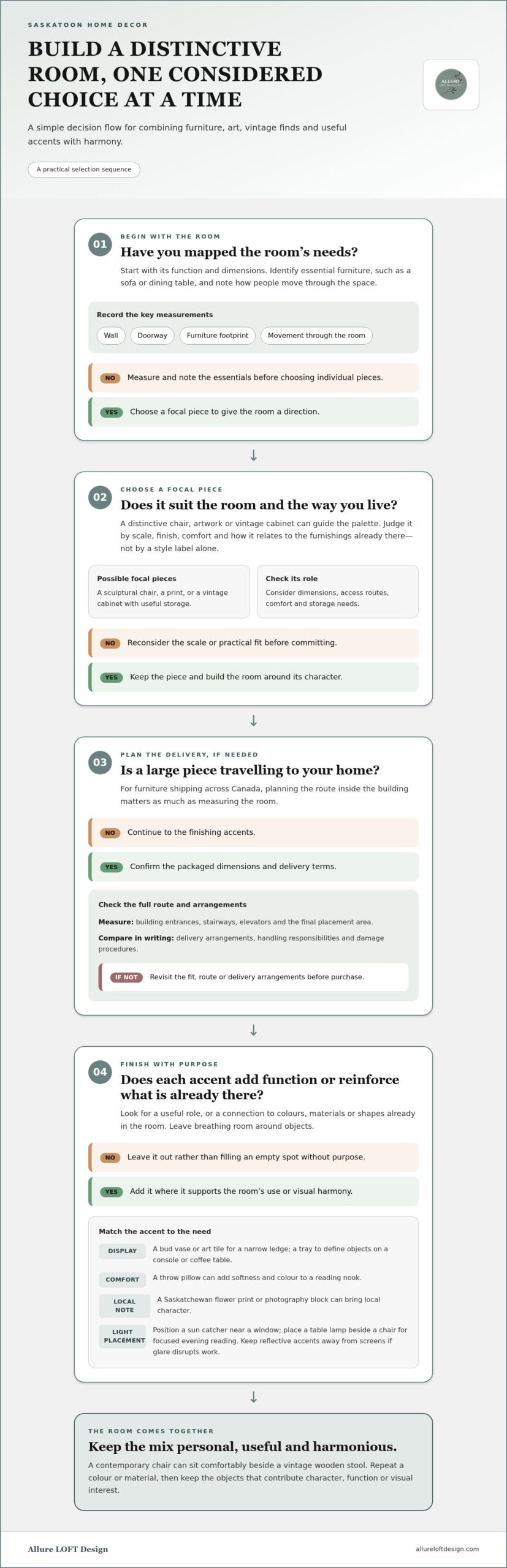
Use this selection sequence to keep choices cohesive:
- Set the foundation: record room measurements and identify essential furniture, such as a sofa or dining table.
- Choose a focal piece: select a distinctive chair, artwork or vintage cabinet to guide the room’s palette.
- Check fit and use: compare dimensions, access routes, comfort and storage needs before committing.
- Finish with accents: add smaller household goods where they improve function or reinforce a colour already present.
Local listings offer useful reference points. These examples show how an individual piece can contribute to a design at different scales. They are market listings, not a guide to every item’s condition, provenance or suitability. Inspect vintage furniture for stability, surface wear and practical dimensions, then consider how its character will sit alongside newer pieces.
Furniture shipping across Canada takes planning before purchase. First, confirm the item’s packaged dimensions and delivery terms. Then measure building entrances, stairways, elevators and the final placement area. For a large cabinet travelling to a Saskatoon home, the route inside the building matters as much as the room measurements. Compare delivery arrangements, handling responsibilities and damage procedures in writing. Careful planning connects the chosen piece to its destination, rather than leaving fit and access to chance.
New home décor accessories
Accessories can refresh a room without changing its main furniture. In a Saskatoon living room, a bud vase can create a small focal point on a side table. A Saskatchewan flower print can introduce local character above a console. Choose accents that relate to existing colours, materials or shapes. Repeating a detail, such as a warm wood tone, helps bring separate objects together.
Give purpose to surfaces and corners that need it. A pillar candle holder can dress a dining table, while a succulent planter can enliven a bright windowsill. A macrame plant hanger can draw the eye upward where floor space is limited. In a reading nook, a throw pillow adds softness and colour. These choices work best when they serve the room’s use, rather than simply filling an empty spot.
Light placement also changes how accessories look throughout the day. Position a small sun catcher near a window where natural light reaches it. Place a table lamp beside a chair for focused evening reading. Keep reflective accents away from screens if glare disrupts work. In a compact layout, consider the view from the entry and main seating area before adding objects. This keeps pathways clear and focal points deliberate.
For a balanced arrangement, vary height and shape. Pair a low art tile with a taller vase, leaving breathing room around both. A small photography block can add a distinct image without requiring wall installation. Grouping objects on a tray helps define their place on a console or coffee table. Try removing one item, then keep only pieces that contribute colour, texture or function.
- For a soft accent: select a dried lavender bundle or dried flower bouquet for a shelf or table.
- For a local note: choose a Saskatchewan flower print or photography block.
- For a compact display: combine a bud vase with an art tile on a narrow ledge.
- For vertical interest: consider a plant hanger or wall shelf, while keeping access and clearance in mind.
Eco-conscious choices begin with intended use and lasting appeal. Choose accessories you can keep in rotation across seasons, rather than pieces tied to a short-lived trend. Natural textures, reusable containers and durable finishes can suit a considered home when their care requirements fit your routine. For example, an easy-to-clean planter may be more useful than one chosen only for its colour. Read care details and inspect construction before deciding.
In Saskatoon homes, seasonal light and compact rooms can influence accessory choices. A pale vase may stand out against a darker shelf, while a saturated print can enliven a neutral wall. Keep the arrangement proportional: a small object can disappear on a broad mantel, while an oversized accent can crowd a narrow console. For a considered selection of household products and accessories, choose pieces that support your room’s palette, comfort and everyday routines.
What are typical prices for unique home decor in Saskatoon?
There isn’t one typical price for distinctive décor in Saskatoon. A small accent and a substantial furniture piece serve different purposes and involve different materials, scale and construction. Local listings include dried botanicals, art tiles, prints, planters, pillows, shelves and furniture. Compare items by category first, then assess their materials, condition, dimensions and intended use. This gives a more useful budget picture than treating every decorative piece as interchangeable.
Small accessories generally take less space and material than furniture, but their value still depends on finish and craftsmanship. A bud vase, candle holder or art tile can add a considered detail to a shelf. Compare the finish, the item’s stability and how you’ll use it. A decorative object that gets handled often may need a more durable surface than an accent placed out of reach.
Artwork varies by format and production. A small print, photography block and larger framed work differ in size, presentation and materials. Before choosing, measure the wall and consider viewing distance. A modest print may suit a narrow hallway, while a larger piece can anchor a living-room wall. Framing and display hardware may affect the total cost, so include those needs in your planning.
For textiles and plant accessories, compare fabric, construction and care requirements. A throw pillow’s cover and finish affect its suitability for daily use. A macrame plant hanger must fit the planter and chosen hanging location. A succulent planter needs suitable dimensions for the plant and surface. Check details that affect longevity, rather than choosing solely by colour or first impression.
- Small accents: assess finish, material and whether the piece serves a practical purpose.
- Artwork: account for scale, framing and the wall where it will hang.
- Textiles: consider fabric, construction and cleaning needs.
- Furniture: compare dimensions, condition, construction and delivery requirements.
Vintage furniture deserves a separate assessment. A reclaimed wooden piece may have wear that adds character, but its condition affects its usefulness. Inspect joints, stability, surfaces and storage components. A vintage side table with a sound structure may suit everyday use; a fragile decorative object may be better reserved for display. Provenance can also inform a decision, though appearance alone doesn’t establish a piece’s history.
To set a realistic décor budget, list the items the room needs before browsing. Separate essentials, such as a lamp for reading, from optional accents, such as a decorative print. Prioritize pieces with lasting function, then choose supporting accessories around them. For a living room, this might mean budgeting first for seating and task lighting, then adding art or small objects. This sequence balances visual interest with comfort and utility.
For unique home décor in Saskatoon, compare like with like: a small print against similar formats, or a vintage table against furniture of similar condition and scale. Include delivery and any required framing or installation in your plans. A lower listed price may not reflect the full cost of bringing an item home and preparing it for use. Careful comparison helps you choose pieces that suit both the room and your spending priorities.
These examples give a sense of listed prices for several smaller accents, but they are no substitute for comparing each item’s materials and condition.
Use these listings to begin a budget, then consider whether each piece fits your room and intended use. A lower listed price may suit a small finishing touch, while a purchase that needs careful placement, matching or maintenance calls for more thought. Assess a larger or vintage item separately for structure, dimensions and delivery needs; prices for small accessories don’t establish what furniture or distinctive larger pieces should cost.
Are there Saskatoon home decor shops in downtown or other neighbourhoods?
Yes, you can explore home décor in downtown Saskatoon and neighbourhood shopping areas. Rather than assuming each district offers the same experience, assess how each shop’s selection suits your taste. One store may present a more edited visual direction, while another may offer a different mix of household goods. Let the pieces themselves guide your comparison.
Downtown browsing works well when you want to experience a shop’s setting and presentation. Notice how displays combine colour, texture and scale. A well-arranged vignette can help you picture a lamp or decorative object in context, even when you’re shopping for just one piece. Pay attention to the atmosphere you respond to: restrained displays may suit a calm interior, while layered arrangements might inspire a more collected look.
Neighbourhood shopping offers another way to discover selections at a measured pace. Choose an area for a dedicated browsing visit, then assess each stop on its own merits. Look for a point of view that complements your home, rather than expecting every shop to carry the same categories. If a store’s displays emphasize natural textures, for instance, consider whether those materials would complement your existing finishes.
Use a simple evaluation method as you browse:
- Observe the selection: note whether the pieces feel cohesive or intentionally varied.
- Consider the presentation: look at how colour, texture and scale work together in displayed arrangements.
- Assess your response: identify which details feel at home with your own preferences.
- Make a considered choice: select pieces that contribute something distinct without shifting the room’s overall character.
Shopping in person is especially useful when a finish or texture matters to your decision. A fabric’s appearance, the weight of a ceramic object or the feel of a wood surface can be difficult to judge from a photograph. Compare an item under the shop’s lighting, then picture how it may look in your home. A subtle finish in one setting can feel more prominent against different colours and materials.
Keep the visit focused on discovery, not on buying something at every stop. A shop’s arrangement can suggest combinations you hadn’t considered, but those ideas still need to suit your rooms and routines. If a display inspires a new direction, note the design detail: perhaps a contrast between matte and reflective surfaces, or a repeated shape. That insight can inform later choices without requiring you to reproduce the display exactly.
Downtown and neighbourhood visits can each offer a useful perspective on home décor in Saskatoon. Choose the setting that best supports your purpose, whether you want to experience curated displays or explore a particular area at a relaxed pace. Notice what feels coherent with your home, then make selections with intention. To bring a considered direction to your spaces, plan your home décor choices around function, scale and materials.
Allure LOFT Design: Furniture, Fixture & Equipment (FF&E) Procurement
Allure LOFT Design offers Furniture, Fixture & Equipment (FF&E) Procurement for projects that need coordinated furnishings, fixtures and equipment. Turn to this service when individual décor choices need to work together across a room or a larger project. Consider how each selection supports the space plan, daily function and intended atmosphere.
For a home refresh, household products, furniture and accessories can help balance character and practical use. Renovation & New Build Consulting can support design decisions as a home takes shape, while Commercial Interior Design serves business environments. The right next step depends on your space and the scope of your plans.
Contact Allure LOFT Design to discuss your project and the design support that suits your space.
Shape a home that feels distinctly yours
Start by deciding what you want your home to make possible. A quiet place to unwind, a welcoming setting for guests or a more focused work area can each guide different design choices. Write down the feeling and function you want from the room before making further decisions. That intention gives each choice a clear purpose and helps your space reflect the way you live. With unique home decor in Saskatoon, the goal isn’t simply to fill a room. It’s to create an environment that feels considered, comfortable and personal.
Allure LOFT Design can help you shape those priorities into a thoughtful direction for your space. Share what you’re planning and what matters most, whether you’re refreshing one room or considering a broader project. Contact Allure LOFT Design to discuss a considered next step. Your home can grow into a more expressive and harmonious reflection of you.
Frequently Asked Questions
Where can I find unique home decor stores in Saskatoon?
Explore downtown Saskatoon and neighbourhood shopping areas, organizing your search around the pieces you need. Look for artwork and smaller accents separately from furniture, which may require more space and delivery planning. Before visiting, note the room’s dimensions, preferred materials and colour palette. This makes it easier to compare options across the city and choose items that suit your home.