


A material’s sustainability isn’t determined by its appearance or a single label. When assessing sustainable interior design materials, consider where they come from, what they’re made of, how they affect indoor spaces, and whether they can last, be repaired or reused. The most thoughtful choices balance these factors with the room’s needs.
It makes sense to want an interior that feels refined and comfortable while considering its environmental impact. Labels and material names can help, but performance, maintenance and suitability matter too. A delicate natural fibre, for example, may not work as well in a busy household as a durable performance textile.
This guide explains how to assess material sustainability and apply it in everyday spaces, from recycled-content products and natural-fibre textiles to locally made furnishings and considered home decor. It also explores cork, reclaimed wood, recycled glass and paper for finishes, furnishings and accents. For Saskatoon homes, the goal is a coherent material palette that supports comfort and function while reflecting the character of the space.
Key Takeaways
- Assess materials by their sourcing, composition, indoor emissions, durability and potential for repair or reuse, rather than relying on appearance alone.
- Consider recycled-content products and natural-fibre textiles for finishes and furnishings, while matching each material to the room’s use and maintenance needs.
- Look for responsible sourcing information and relevant certifications when evaluating wood and engineered hardwood; construction, repairability and lifespan also matter.
- Locally made furnishings can reduce unnecessary shipping, while reusing or reupholstering existing pieces can extend their useful life.
- Bring sustainable choices into home decor through considered flooring, lighting, textiles and accents, then coordinate them into a functional material palette.
1. Recycled-content products and natural-fibre textiles
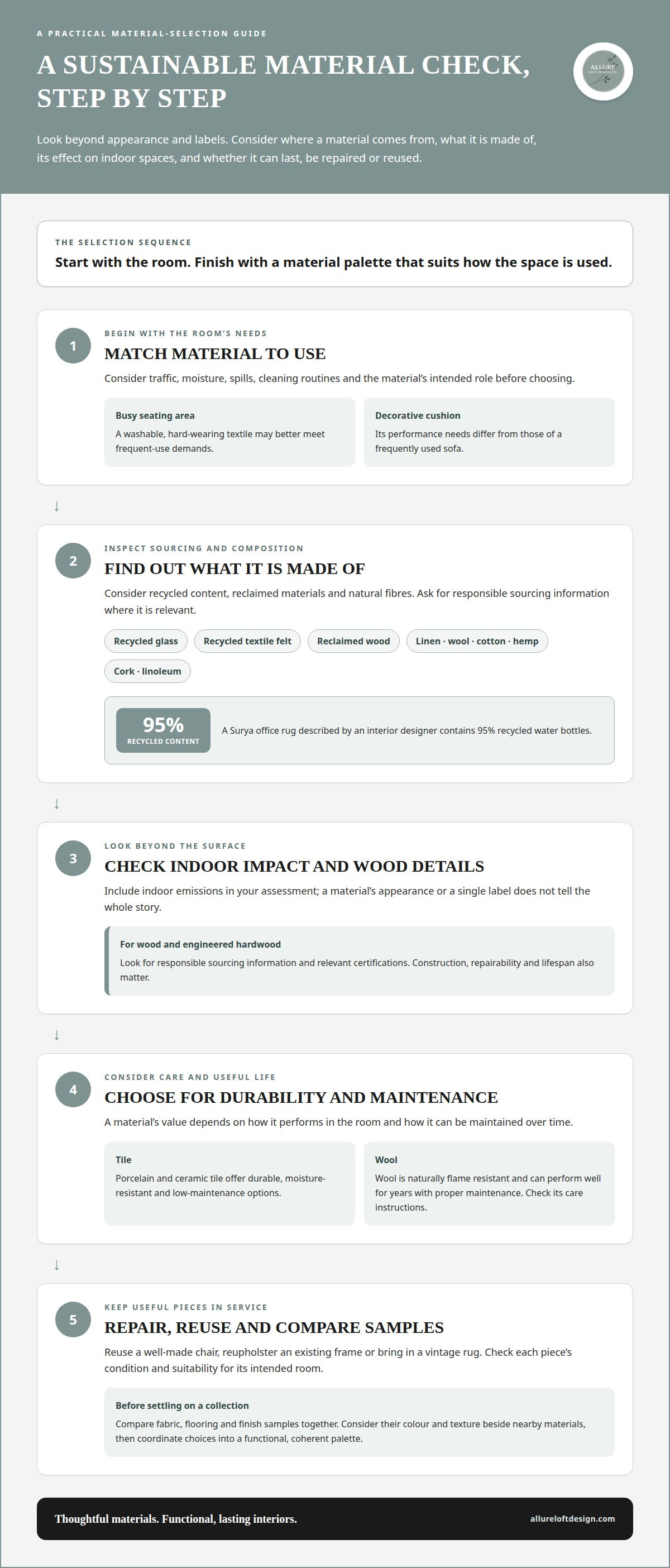
Sustainable interior design materials can include recycled products, reclaimed wood, natural fibres and durable surfaces. Their value depends on more than their ingredients: intended use, maintenance, lifespan and potential for reuse all matter. A recycled textile suited to a decorative cushion, for example, may not meet the demands of a frequently used sofa.
Recycled content can give discarded materials a considered second use. Recycled glass can become a countertop or tile, while recycled textile felt can form acoustic wall hangings, lampshades, storage baskets or upholstered panels. A Surya office rug described by an interior designer contains 95% recycled water bottles, showing how a familiar furnishing can incorporate recovered material.
Natural-fibre textiles offer another set of options. Linen, wool, cotton and hemp can work for window treatments, decorative pillows and some upholstery. Organic cotton and wool offer alternatives to petroleum-based synthetic fabrics. Wool is naturally flame resistant and can perform well for years with proper maintenance, so its care instructions matter when considering its expected lifespan.
Existing furniture, vintage pieces and antique rugs can also support a thoughtful material plan. Reusing a well-made chair avoids replacing it just to change its appearance; reupholstery can give its frame a fresh role. A vintage rug can add texture and colour while keeping an existing item in use. Check each piece’s condition and suitability for its intended room before incorporating it.
For hard surfaces, reclaimed wood can be used as flooring or made into custom furniture. Porcelain and ceramic tile offer durable, moisture-resistant, low-maintenance options, and recycled-content tile is available in many collections. Bio-based options include cork and linoleum. Cork is harvested from tree bark without felling the tree, while linoleum is made primarily from linseed oil, wood flour and mineral pigments.
Recycled paper and paper pulp can be used for more than packaging. Designers use these materials for pendant and table-light shades, decorative trays, bowls, room dividers and small tables. Their light, sculptural quality can add visual interest, but choose a placement suited to the object’s form and daily use.
To compare materials, start with the room’s demands, then consider composition, durability and care. A busy seating area may need a washable, hard-wearing textile, while a decorative cushion has different performance needs. Check recycled content, favour pieces that can be repaired or reused, and compare samples of fabrics, flooring and finishes before selecting a collection.
2. What is sustainable interior design?
Sustainable interior design considers a material’s origin, production, useful life and end-of-life options. Reclaimed wood, for example, gives existing timber another purpose, while cork comes from tree bark harvested without felling the tree. The right choice must also suit the room, its maintenance needs and the people using it. A beautiful finish has greater value when it stays functional over time.
Clay plaster offers a distinctive wall finish with a natural, tactile appearance. Its texture can bring depth to a living room or bedroom without relying on patterned wallcovering. Before specifying it, consider the wall’s condition, the desired finish and how the surface will be maintained. A sample panel viewed beside flooring and fabric shows how its colour and texture interact with other treatments.
For flooring in Canada, consider reclaimed wood, bamboo, cork and linoleum. Reclaimed wood reuses existing material, while bamboo used for flooring and panels matures in a few years. Cork can bring warmth and acoustic softness to bedrooms, offices and quieter family spaces. Linoleum is made primarily from linseed oil, wood flour and mineral pigments. No single option suits every room: moisture, wear, maintenance and existing floor conditions all affect suitability.
Cork also works beyond floors. Cork wall and ceiling coverings can absorb sound, making them worth considering for a home office or shared living area. Natural-fibre rugs made from wool, cotton, linen or hemp bring texture underfoot. Match the fibre and construction to the room’s traffic, cleaning routine and exposure to spills.
Reclaimed wood can become shelving, furniture or a feature surface, preserving the character of its grain and previous use. Bamboo panels offer another way to bring a renewable plant material into an interior. In both cases, the finish and intended application matter: a surface used daily needs different performance from decorative panelling. Compare samples with nearby flooring and cabinetry before settling on a material palette.
Mycelium, the root-like structure of fungi, is emerging as a design material for sculptural lampshades, acoustic wall art, decorative panels and small tables. It’s better viewed as a developing craft and design material than a universal substitute for conventional furnishings. For interior use, consider moisture sensitivity, coatings, production scale and durability. A small decorative object may suit this material today, while a heavily used surface may call for another choice.
3. How can you tell if a material is genuinely sustainable?
Assessing sustainable interior design materials means looking beyond a label to sourcing, emissions, durability and repair options. Engineered hardwood, for example, may combine a real wood wear layer with a stable core. Its sustainability also depends on responsible sourcing and how long it serves the room. Certifications can support specific claims, but they don’t describe every aspect of a product’s impact or suitability.
For a Saskatoon project, choose materials that meet applicable building and fire-safety requirements for the space and its intended use. Requirements depend on the material and application, so flooring and wallcovering specifications need separate consideration. Review the proposed installation alongside the product choice, since the substrate, adhesive and finish all contribute to the completed assembly.
Material costs depend on factors such as wood species, grade, core construction, finish, certification and shipping. A specific project’s price depends on its scope. Installation requirements and the preparation needed for the existing surface can also affect the overall decision.
For wood and paper products, Forest Stewardship Council (FSC) certification applies to products from responsibly managed forests. Cradle to Cradle and Fair Trade certifications can also provide information about responsible sourcing. GREENGUARD and FloorScore certifications verify measured product off-gassing through chamber testing. Each certification addresses distinct attributes, so match the evidence to the question: sourcing, ingredients or emissions. A certificate is useful when its scope relates to the product being specified.
Assess engineered hardwood by examining both its surface and core. The real wood wear layer provides the visible timber finish, while the stable core supports the flooring structure. Review responsible sourcing claims and consider whether the surface can be repaired or refinished. Ask how the floor will stand up to expected traffic and the maintenance routine. These details help distinguish a product suited to a long-term installation from one selected mainly for appearance.
Wood panels deserve the same scrutiny as visible flooring. Specifications for sustainable interior design materials should cover cabinet boxes, wall panels and built-ins, as well as flooring adhesives and construction sealants. A bio-sourced wallcovering may contain plant-based components, but that alone doesn’t describe its coatings, emissions or useful life. Read the product documentation as a whole, including instructions for cleaning, repair and replacement.
Responsible sourcing also considers people and production conditions. Ethical sourcing includes suppliers that prioritize fair labour practices, safe working conditions and environmentally responsible manufacturing. Platforms such as mindful Materials, EcoVadis and Sedex can help assess suppliers’ sustainability and ethical practices. In a project specification, connect each claim to the exact product and application. This makes alternatives easier to compare consistently across rooms and helps keep finishes, lighting and furnishings aligned with the project’s priorities.
4. Locally made furnishings and transport emissions
A locally made furnishing can reduce unnecessary shipping, but distance alone doesn’t determine its environmental impact. Consider where its materials come from, how it’s manufactured and whether it’s durable enough for daily use. For a Saskatoon project, locally made custom millwork can also support quality control and precise detailing. These factors help assess the whole furnishing, not just its final delivery route.
Maintain furniture according to its material and care instructions. Repair loose joints, damaged finishes or worn upholstery before replacing a piece. When it no longer suits the space, consider reuse or reupholstery first, then choose an appropriate recovery or disposal route for its materials.
Custom furnishings can be designed around a room’s dimensions and its occupants’ routines. A dining table with repairable components, for example, may remain useful as needs change when its construction is sound and its detailing feels timeless. A locally made cabinet can also be tailored to storage needs, reducing the chance of replacement after a layout change. Durability depends on material selection, joinery, finish and the demands of the space.
Existing pieces offer a practical alternative to buying new. A vintage dresser can serve as storage after careful refinishing, while reupholstery can refresh a chair with a sound frame. In a living room, keeping the original furniture and changing its fabric can preserve useful construction while adding considered colour or texture. Select upholstery for the piece’s intended use, cleaning needs and exposure to wear.
Waste-based materials can give furniture and millwork distinctive character. Agricultural-waste composites can be used for cabinet fronts, shelving, tabletops and side tables. Shell and mineral-waste composites appear in trays, lamp bases, handles, decorative tiles and planters. Turning discarded feedstocks into visible design details still requires choosing a material that performs well in its setting. A tabletop, for instance, faces different demands from a decorative panel.
When comparing locally made and shipped furnishings, look at the full supply path. A nearby maker may shorten shipping for the finished item, while components or raw materials could travel farther. Consider how the piece is constructed, which materials it incorporates and whether damaged parts can be repaired. Understanding these details helps balance transport, manufacturing and useful life without treating local origin alone as proof of sustainability.
For a more renewable material palette, consider furniture that combines reclaimed or recovered components with durable construction. Specify finishes suited to the intended maintenance routine, and plan how an item could be adapted if its use changes. In a commercial space, replaceable upholstery or repairable table components can support continued use. Choosing pieces that can evolve, be maintained and find another purpose helps reduce premature disposal.
5. Applications of sustainable materials in home decor
Start with the surfaces that shape daily routines, then add decorative details. In a Saskatoon living room, reclaimed wood shelving can bring warmth, while a durable rug defines the seating area. In a quieter bedroom or home office, cork flooring offers acoustic softness and distinctive texture. Materials work best when they suit the room’s use as well as its aesthetic.
For kitchens and bathrooms, consider porcelain or ceramic tile where moisture resistance and straightforward maintenance matter. Recycled-content options are available in many collections. A carefully selected remnant stone slab can also work for a smaller vanity, bar or fireplace surround, making use of material that might otherwise remain unused. Match the surface to practical demands, including cleaning and expected wear.
Paint is another visible choice with a functional role. Low- or zero-VOC paint offers an accessible starting point for a considered interior specification. Use colour to establish a calm backdrop, then coordinate it with cabinetry, flooring and natural light. Viewing a finish sample in the actual room helps show how its colour shifts beside windows and under evening lighting.
Decorative accents let emerging and waste-based materials appear in smaller, intentional ways. Mycelium can form sculptural lampshades, acoustic wall art, decorative panels and small tables. Cork can be used for trays, vases, stools, wall tiles and lamp bases. Gourd can become a sculptural vase or pendant light, while shell and mineral-waste composites can be made into handles, planters or decorative tiles.
Textiles bring softness and colour to window treatments, cushions and upholstery. Linen, hemp, cotton and wool each offer a distinct texture, but the fibre should suit the use and care needs. In a busy household with children or pets, a durable performance textile may suit long-term upholstery better than a natural fibre. Recycled textile felt can add acoustic interest as a wall hanging or upholstered panel.
Include sound and comfort in the decor plan. Cork wall or ceiling coverings can absorb sound, while recycled felt panels can add texture and help define a workspace. In a condo, flooring choices also need to suit slab conditions and acoustic requirements. Visual appeal matters, but so does a material’s performance in the specific building and room.
Bring samples together before ordering. Compare colour, texture, maintenance needs and product information across the full palette, rather than choosing each finish in isolation. A certification can speak to a particular product attribute, while the overall selection still needs to meet the project’s design standards. Plan a cohesive material palette that balances function, comfort and visual harmony.
Allure LOFT Design: Commercial Interior Design
Allure LOFT Design can help businesses translate sustainable material priorities into a cohesive, functional commercial space. Turn to its Commercial Interior Design when planning a new environment or rethinking how an existing one supports comfort, productivity and daily use.
Material decisions connect closely with space planning, finishes, lighting and furnishings. Allure LOFT Design’s Furniture, Fixture & Equipment (FF&E) Procurement service supports selecting furniture and fixtures that work with the design direction. For a renovation or new build, the firm’s consulting can bring material choices into the wider planning process. The result is a considered interior where appearance and practical needs inform one another.
Contact Allure LOFT Design to discuss your commercial interior design plans.
Shape the next chapter of your space
Begin with a clear design priority: a calmer home office, a more welcoming living area or a commercial space that better supports daily work. Let that need guide the material palette. The right choices should feel considered in the room and remain practical as routines change.
As you move from ideas to a finished interior, consider how colour, texture and light work together. A sample board can reveal how finishes relate before they become part of the space. This thoughtful process gives sustainable interior design materials a purpose beyond their environmental qualities: they contribute to comfort, function and a coherent aesthetic.
If you’re ready to develop those ideas into a design direction for your home or business, start a conversation with Allure LOFT Design. A well-considered interior can begin with a single decision, then grow into a space that feels both intentional and distinctly yours.
Frequently Asked Questions
How can you tell if a material is genuinely sustainable?
Look for evidence about the product itself, not just broad environmental language. For a dining table, useful details include the wood source, finish, construction and repair options. Certifications can support specific claims, while product documentation explains what they cover. Consider whether the material suits the room’s use and whether its care requirements make continued use practical.
What is sustainable interior design?
Sustainable interior design makes environmental considerations part of planning a functional, comfortable space. It accounts for material choices, how rooms are used and whether furnishings and finishes can remain useful as needs change. In a home office, for instance, flexible furniture and adaptable lighting can help a room serve more than one purpose. The goal is a coherent space shaped by long-term use, not appearance alone.
Can you make an existing space more sustainable without a full renovation?
Yes. Start with changes that preserve what already works: repair a loose chair joint, reupholster a sound sofa or replace a frequently used bulb with an LED. Rearranging furniture can also improve how a room functions without replacing finishes. If a wall needs refreshing, low- or zero-VOC paint is one possible update. These smaller decisions can work with the room’s existing layout.
Which low-VOC paints, finishes, and adhesives are available in Canada?
Canadian projects can specify low- or zero-VOC paint and low-emitting products for finishes and adhesives. GREENGUARD and FloorScore certifications use chamber testing to verify measured product off-gassing. They relate to emissions, not every sustainability attribute, so consider them alongside durability, ingredients and intended use. Include adhesives and sealants in specifications rather than focusing only on visible paint or flooring.
How do recycled, reclaimed, and rapidly renewable materials compare for interiors?
Recycled materials reprocess recovered content, such as glass or textile felt. Reclaimed materials give existing items, such as wood, another use without new harvesting. Rapidly renewable options include bamboo, which matures in a few years. Each has different applications and production considerations. A reclaimed wood shelf, recycled-content tile and bamboo panel can suit different needs, so compare durability, processing and fit for the space.
How can I assess the embodied carbon and lifecycle impact of interior materials?
Compare a product’s life from raw material sourcing through manufacturing, transport, installation, maintenance and eventual reuse or disposal. A nearby cabinet, for example, may travel less as a finished piece, while its components could come from farther away. Consider expected service life and repair options alongside material origin. Product-specific lifecycle information offers a stronger basis for comparison than transport distance or material type alone.
What health risks can come from interior materials, including VOCs and formaldehyde?
Some interior products release emissions into indoor air, which is why low-emitting specifications matter. For products associated with VOC or formaldehyde concerns, prioritize clear emissions information and relevant chamber-tested certifications, such as GREENGUARD or FloorScore where applicable. Include concealed items, including cabinet boxes, adhesives and sealants, in the specification. Product selection can help address indoor air quality, but no single label describes every potential exposure.
How can I source locally made and responsibly harvested interior materials in Canada?
For wood and paper products, FSC certification applies to products from responsibly managed forests. For locally made furnishings, look for makers who can describe material origins, construction and repair options. Local custom millwork can reduce unnecessary shipping and support precise detailing. Supplier assessment platforms such as mindful Materials, EcoVadis and Sedex can also help evaluate sustainability and ethical sourcing practices during project procurement.