

Buying designer furniture direct from a factory isn’t always the most economical route. Trade accounts can offer furniture discounts of 20-50% below retail, while a group purchasing organization (GPO) may bring buyers together to access negotiated supplier contracts. Thoughtful furniture sourcing and procurement means comparing these routes alongside product quality, delivery needs and the full project brief.
It makes sense to seek value without compromising comfort, durability or visual harmony. The right furniture sourcing and procurement route depends on what you’re buying, how much you need and the support required to coordinate each decision.
This guide explains how trade accounts and purchase orders work, how to compare factories, trading companies and sourcing services, and how to assess furniture for a Saskatoon home or commercial space. You’ll learn to compare quotes beyond the initial price, including materials, lead times, logistics and fit with your space plan. The goal is a considered purchase: furniture that serves its purpose, complements the design and suits the project as a whole.
Key Takeaways
- Compare factories, trading companies and sourcing services by how well each fits your product needs, project scale and coordination requirements.
- Use a purchase order to document approved furniture choices, quantities, budgets and delivery details before placing an order.
- Consider how trade account terms support the full project, from design decisions and ordering to delivery and installation coordination.
- For multiple properties or projects, centralized purchasing can help organize specifications, supplier relationships and order tracking.
- Evaluate Canadian furniture suppliers against durability, lead times, lifecycle costs and fit with your space plan and operational needs.
How can I find designer furniture at discounted rates?
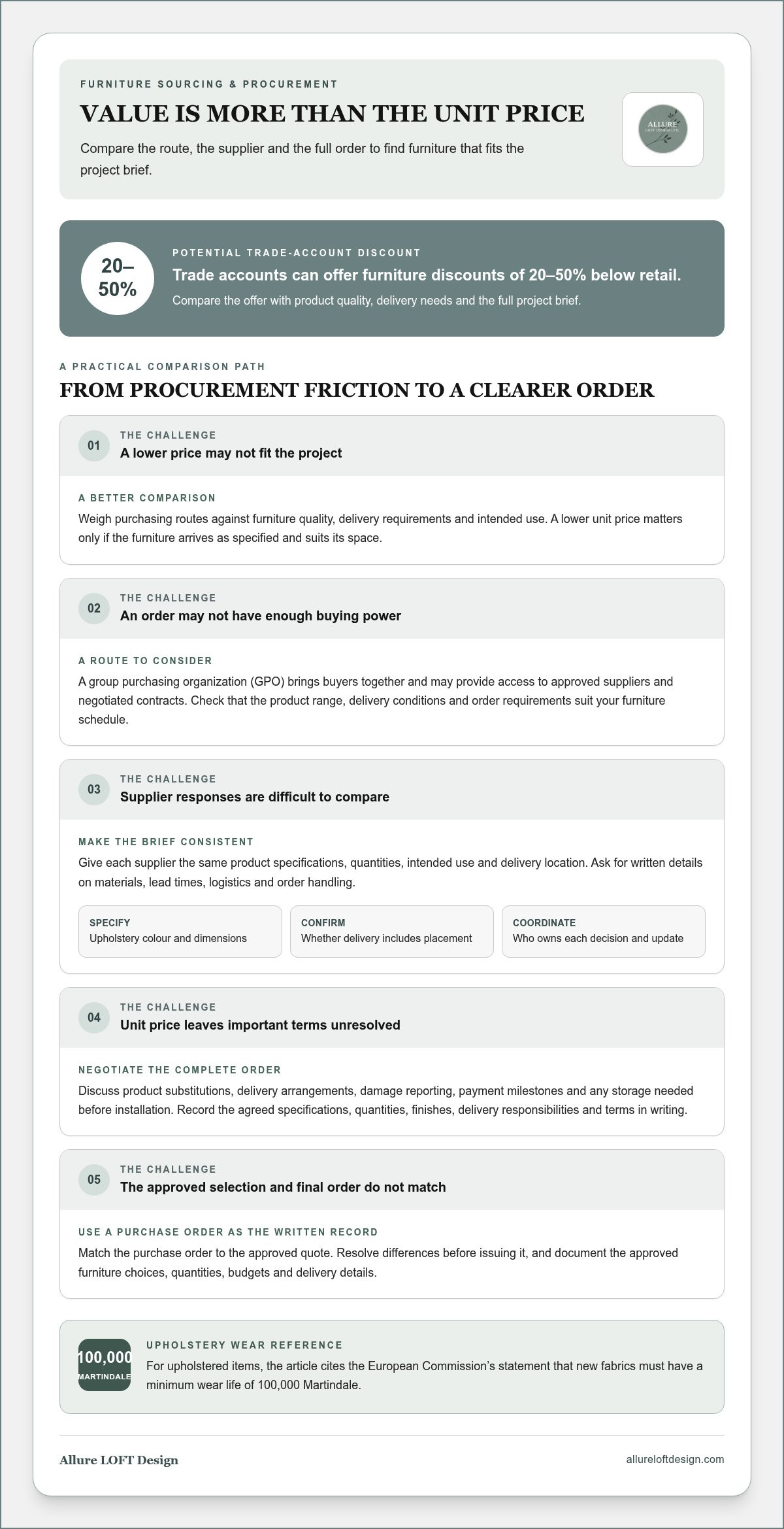
Compare purchasing routes against quality, delivery and project requirements. A lower unit price matters only if the furniture arrives as specified and suits its intended space.
-
Use Aggregated Buying Power
Consider whether a group purchasing organization (GPO) or pre-competed supplier agreement suits your order. A GPO combines demand from multiple buyers and may provide access to approved suppliers and negotiated terms. Consolidated orders can also help coordinate logistics. Compare the agreement’s product range, delivery conditions and total order requirements with your furniture schedule.
Check whether the agreement covers the exact furniture category, finishes and quantities. A negotiated rate may not suit your project if the available designs miss the space plan or require costly extra handling. For public-sector purchasing, an RFSO, or request for standing offers, can establish supplier terms before individual orders are placed. Follow the process that applies to your organization.
-
Contact and Assess Suppliers
Give suppliers a clear brief with product specifications, quantities, intended use and delivery location. Request written details on materials, lead times, logistics and order handling. Share the same requirements with each supplier so you can compare their responses on equal terms. For example, specify upholstery colour, dimensions and whether delivery includes placement.
Assess reliability through the clarity and completeness of each response. Record who owns each decision, including the buyer, designer and facilities team, and share updates when specifications or timing change. Confirm approved selections and budgets with stakeholders before ordering. For upholstered items, the European Commission states that new fabrics must have a minimum wear life of 100,000 Martindale.
-
Negotiate and Complete Purchasing
Negotiate the complete order, not just the unit price. Discuss product substitutions, delivery arrangements, damage reporting, payment milestones and any storage needed before installation. Put the agreed specifications, quantities, finishes, delivery responsibilities and terms in writing. The purchase order should match the approved quote, so resolve any differences before issuing it.
For an RFP, include the project scope, required furniture, performance criteria, materials, quantities, delivery location, schedule and response format. Explain how proposals will be compared, for example, by durability, design fit, logistics and total lifecycle cost. This helps suppliers provide comparable offers and gives stakeholders a record of the selection rationale.
- What Canadian taxes, customs duties and import rules apply? Include applicable taxes and import charges when comparing domestic and overseas offers. The amount depends on the product and its origin, so include these cost categories in your landed-cost comparison.
- What sustainability and certification standards should buyers check? Request documentation for claims such as FSC-certified wood, GREENGUARD Gold certification, recycled-content materials or take-back programs. Compare the evidence and material details alongside durability.
- How much does commercial furniture cost in Canada? Costs depend on furniture type, materials, quantity, customization, delivery and installation needs. Compare complete proposals against the same specifications rather than relying on unit price alone.
- What are common furniture procurement risks, and how can buyers reduce them? Specification gaps, delivery changes, damage and unclear responsibilities can disrupt an order. Use written approvals, purchase orders that match approved quotes, clear logistics terms and an arrival inspection to manage these risks.
What is an interior design purchase order?
A purchase order is a written record of an approved furniture purchase. It links the project brief, supplier quote and final order through clear specifications and responsibilities.
- Centralize purchasing across properties or projects. Create a schedule for each location, listing furniture, finishes, quantities, delivery needs and budget approvals. Shared records help keep selections consistent across properties while allowing layouts to suit each space. For example, offices can use the same chair specification but order different quantities. Assign someone to update the master schedule when stakeholders approve changes.
Centralized purchasing can reduce administrative work and support consistent procurement across projects. It can also make order tracking easier when several deliveries share a supplier or timeline. Keep each site’s delivery address, receiving contact and installation sequence distinct. Combined records should make it clear which location approved a change and will receive an item.
- Compare group purchasing organizations (GPOs). A GPO aggregates buyer demand to provide access to pre-negotiated supplier contracts for FF&E. Review the approved supplier list, covered furniture categories, contract terms and ordering process. Compare these with your project schedule and specifications. A program is useful only if its suppliers and purchasing conditions align with the products you need.
Assess whether centralized buying suits your organization’s purchase volume, supplier access and potential cost advantages from aggregated contracts. Smaller businesses may also find this route relevant, depending on these factors. Before joining, review any membership fees, purchase commitments or participation conditions in the agreement. Consider the full terms rather than assuming group access makes every order a better fit.
- Build a purchase order from approved documents. Start with the accepted supplier quote and final selections. Record product descriptions, item codes where supplied, quantities, finishes, unit amounts, delivery charges and applicable taxes. Include the delivery location, requested timing, receiving contact and any agreed storage or installation arrangements. Attach approved drawings, specifications or samples when they clarify the intended product.
Check that the purchase order matches the quote before issuing it. If a fabric sample or finish approval has changed, update the documentation first. Identify who can approve substitutions, schedule changes or additional charges. Keep the revised quote and written approvals with the order so purchasing decisions remain traceable.
- Track fulfilment through closeout. Keep the purchase order, supplier confirmation, invoices and delivery records together. Log changes against the relevant property or project, especially when several orders are active. On receipt, compare delivered items with the approved schedule and promptly note any damage or discrepancies. This record supports accurate invoice review and helps resolve questions about what was ordered, approved and received.
What are trade accounts, and why do I need one?
A trade account gives eligible design professionals access to supplier purchasing programs. Depending on the program, it may offer trade pricing, payment terms or help coordinating an order. Its value depends on the project’s volume and the services included with the account.
- Review the account terms against your project needs. Interior design trade accounts may provide furniture discounts of 20-50% below retail. Some programs offer net-30 or net-60 payment terms. Confirm how a supplier calculates pricing and which products qualify. Compare the final quote, not just the advertised discount, with your approved budget and required specifications.
Check account eligibility, order minimums, payment timing and return conditions before placing an order. For example, an account may help when purchasing chairs and tables together, but matter less for a single item. Include freight, delivery, storage and installation charges in your comparison to get a clearer view of the order’s overall requirements.
- Connect product selection with design decisions. Use the account to coordinate product details with the room’s space plan, finishes and intended use. Confirm dimensions, materials, colour and function before the supplier prepares the order. For a commercial space, check that seating suits the planned layout and that the finishes work with adjacent furnishings.
Keep stakeholders aligned by recording approved selections and who is responsible for decisions. Samples can help you compare upholstery and finishes under the room’s lighting. Begin sourcing early, as custom furniture can have long lead times. Plan delivery milestones around the project schedule, allowing time for production, shipment, receiving and installation.
- Track delivery and installation as distinct stages. Request order confirmation and shipment updates from the supplier, then log changes against the project schedule. Confirm the delivery address, receiving contact, access instructions and expected arrival window. If an order includes several pieces, track each one so missing chairs or delayed components don’t go unnoticed.
Before delivery, assign responsibility for receiving and inspecting the furniture. Record any damage or discrepancies and keep the relevant order documents. Confirm what the delivery arrangement includes, such as placement in the room or assembly. Clear responsibilities help the designer, buyer and site team coordinate without confusing freight arrival with completed installation.
- Plan for service after installation. Keep the supplier’s warranty documents, product details, invoices and delivery records together. Organizations can track repair needs, warranty requests and furniture condition in an asset register. Record the item, location, issue and action taken. At end of life, assess whether furniture can be repaired, reused, donated or recycled through an appropriate local program.
A trade account can support a more coordinated purchasing process, but it doesn’t replace clear project oversight. Before ordering, confirm who handles shipment tracking, installation questions and warranty communication. For projects involving multiple rooms or locations, a shared schedule can connect supplier updates with design approvals and site readiness.
Comparing factories, trading companies and sourcing services
Match the sourcing route to your order’s scale, design needs and coordination capacity. Compare product quality and the full delivery process, not just the quoted unit price.
-
Compare Supplier Types
Choose a supplier model that suits your project’s complexity. A factory connects you directly with production, which can work well for a defined product or repeat order. A trading company can coordinate products from different factories through one commercial relationship. A sourcing service can help identify options and manage coordination when your team needs additional support.
Ask each option for comparable material and product specifications, samples, production details and logistics terms. Smaller or highly customized orders may need a different approach from repeat purchases. Don’t assume fewer intermediaries mean a simpler process; consider who handles communication, quality expectations and delivery milestones.
-
Compare Furniture Sourcing Costs
Compare local, Canadian and overseas offers using the same product specification and order volume. Include freight, handling, delivery, storage and any coordination needed to receive the furniture. For overseas options, account for the additional logistics of moving products to Saskatoon. A lower quoted unit price may not mean a lower total project cost.
The price depends on the project and is provided after a quote request. Cost factors include product type, materials, quantity, customization and logistics. Compare lifecycle cost, durability, lead times, budget fit and compatibility with the design and operational requirements. Use samples or documented specifications to compare like with like.
-
Find and Evaluate Canadian Suppliers
Build a qualified shortlist of three to five suppliers for a defined product or program. Send each the same specifications, quantities, delivery location and response format. Suppliers should reply within 12-24 hours on business days. Track response clarity, product fit and how fully each supplier addresses delivery and project requirements.
Use a comparison sheet to record price components, materials, durability, lead times and service responsibilities. For example, assess whether proposed seating suits the room layout and intended use. Keep stakeholder feedback beside each option, then document the reason for your selection. This creates a clear reference when approving a supplier or reviewing revised proposals.
- Set decision criteria before requesting proposals. Identify essential requirements, such as dimensions, finish, comfort, durability and delivery needs. Separate required specifications from preferences. This distinction helps suppliers propose suitable alternatives without obscuring important design or operational needs.
For sustainability, compare stated material details and supporting documentation, such as FSC-certified wood or recycled-content materials. Record what each proposal demonstrates, then weigh it against durability and project fit. A consistent evaluation process helps teams compare supplier options carefully and make a considered selection.
Finding and Evaluating Furniture Suppliers in Canada
Evaluate each proposal by how well the furniture will work in the finished space. For a Saskatoon project, assess practical fit as carefully as visual appeal.
- Test the proposed layout. Map furniture dimensions onto the floor plan, including clearance for doors, circulation and nearby fixtures. In a compact reception area, check that seating leaves a clear path to the entrance. This review can reveal fit issues before you approve an order.
- Review product documentation. Compare drawings, finish descriptions and care instructions with the intended setting. For example, a dining chair’s shape and upholstery should suit both the room’s design and its daily use. Note any differences between the proposed item and the original design intent.
- Assess how proposals handle changes. Read the supplier’s written terms for substitutions, revised selections and order amendments. Identify how changes are recorded and reflected in project documents. A clear process helps prevent an outdated specification from being used after the team approves a design adjustment.
- Consider the receiving environment. Review access routes, door openings, elevators and available staging areas before confirming selections. A large table may suit the floor plan but be difficult to move through a narrow condo corridor. Consider site constraints as part of the decision, not as an afterthought.
- Document the final evaluation. Record why a proposal suits the project, including layout compatibility, finish coordination and practical use. Keep the selected product information with the design record. This gives the team a reference if questions arise during later project decisions.
For furniture choices that need to align with a broader interior plan, explore FF&E procurement support as part of project planning.
Allure LOFT Design: Furniture, Fixture & Equipment (FF&E) Procurement
Allure LOFT Design provides Furniture, Fixture & Equipment (FF&E) Procurement for projects where furniture choices need to align with the wider design. It can be a useful next step for Saskatoon businesses furnishing a commercial space or homeowners coordinating furniture with renovation and new-build plans. Procurement brings product selection and project requirements into a considered conversation, with comfort, function, aesthetics and space planning in view.
For commercial projects, Commercial Interior Design can connect furniture decisions with the character and use of the space. Renovation & New Build Consulting can support planning when furnishings are part of a broader project. Start with a clear brief outlining the space, priorities and intended use.
Contact Allure LOFT Design to discuss furniture procurement for your project.
Shape the Next Stage of Your Space
Let the way you want to live or work guide your next design decision. Consider what you want to feel different in the finished space: greater ease in daily routines, a quieter atmosphere or a more purposeful connection between rooms. These intentions can help make furniture choices a coherent part of the environment.
At home, consider how a room should welcome rest, gathering or focused work. In a commercial setting, think about how the interior can support comfort, productivity and the character of the business. A clear sense of purpose gives every design choice more meaning.
As you refine your priorities, consider how colour, texture and proportion can create harmony while meeting practical needs. The most rewarding spaces reflect the people who use them and adapt as those needs evolve. Thoughtful furniture sourcing and procurement can contribute to a lasting sense of fit.
With a considered vision, each choice can help create an interior that feels both personal and enduring.
Frequently Asked Questions
How should I manage purchase orders in my projects?
Set an approval path before furniture orders begin. Identify who can approve selections, authorize changes and check invoices. Keep a dated change log so the team can distinguish current decisions from earlier versions. For projects with several rooms, label records by room or area to make review and follow-up more precise.
Need help with your furniture fixtures and equipment procurement?
Prepare a brief before seeking FF&E procurement support. Include the space’s purpose, the atmosphere you want to create, existing finishes to retain and any accessibility or operational priorities. Add reference images if they clarify your preferences, and identify decisions that remain open. This gives the project discussion a clear starting point without committing you to specific furniture choices too early.
What is Furniture Sourcing?
Furniture sourcing is the research and selection process for identifying suitable furnishings for a project. It can include finding options that match a design direction, functional requirements and material preferences. For instance, a homeowner might compare wood tones and table shapes before choosing pieces for an open dining area. Sourcing turns the project requirements into a considered set of furniture options.
What is furniture procurement in interior design?
In interior design, furniture procurement brings selected furnishings into the project’s broader design decisions. It helps coordinate pieces with finishes, room proportions and the intended experience of the space. For example, a workplace’s seating can be considered alongside circulation, lighting and visual character. This connection helps the furnishings feel integrated into the interior rather than added after the design is settled.
What does furniture sourcing and procurement include?
The scope can include product research, selection support and purchasing coordination to bring furnishings into a project. It may also involve aligning furniture choices with the design brief, practical use and receiving arrangements. A homeowner furnishing a reading nook, for example, might focus on a comfortable chair, a suitable side table and a coordinated finish palette.
What are the steps in a furniture procurement process?
Organize the work around decision points: define the project priorities, compare suitable options, approve a direction, then coordinate the order and its arrival. At each point, record who has authority to decide and what information they need. Reviewing a sample, for example, can help resolve a fabric or finish choice before the team commits to a final selection.
What are typical furniture lead times, shipping costs, and delivery options in Canada?
Lead times and shipping costs depend on the item, its origin, customization, shipment size and destination. The price depends on the project and is provided after a quote request. Cost factors include product specifications, shipping distance, handling and delivery requirements. For delivery to a Saskatoon property, compare arrangements such as receiving items at the entrance or placing them in designated rooms.