

What if the fixture that catches your eye is the wrong one for the room? Choosing lighting involves more than finding an appealing design. Scale, purpose and light placement all influence comfort, while finishes and furnishings shape how a fixture feels within the wider interior. A considered Saskatoon lighting store experience connects these decisions instead of treating lighting as an isolated purchase.
A beautiful fixture still needs to provide comfortable illumination and suit the room’s function and proportions. This guide explains how to choose lighting for a Saskatoon home or commercial space, with practical ways to consider room scale, daily activities and fixture placement. You’ll also learn how curated lighting and professional planning can bring these choices into line with furnishings and finishes. At Allure LOFT Design, lighting is considered alongside the needs and character of the space.
Key Takeaways
- Choose lighting with the room’s purpose, proportions and design direction in mind.
- Layer ambient, task and accent lighting to support activities and shape the atmosphere.
- Use room dimensions, ceiling height and furniture scale to guide fixture proportions and placement.
- For a renovation or new build, coordinate lighting decisions with space planning, furnishings and finishes.
- Curated lighting and FF&E procurement can connect comfort, function and visual harmony in a home or commercial space.
What to Look for in a Saskatoon Lighting Store
Lighting affects how easily people read, work, gather and unwind, as well as the character a space conveys. Choosing one fixture can be a focused purchase. Planning the lighting for an entire room calls for a wider view of activities, existing finishes and natural light. A considered selection accounts for all three, rather than treating a fixture as a decorative object on its own.
A design-minded lighting store connects fixture choices with a room’s purpose, proportions and finishes, so illumination feels comfortable and visually at home. That perspective is useful whether you’re refreshing one area or including lighting in a residential or commercial design plan. Architectural lighting design brings together practical and aesthetic considerations, as outlined in these Architectural lighting design principles.
How lighting choices shape everyday comfort
Different activities call for different qualities of light. Reading or preparing food benefits from illumination focused where detailed tasks happen. Conversation and relaxation often feel more comfortable with softer, more distributed light than with a single bright source overhead. In a workspace, lighting should support concentration without creating distracting reflections on a screen or pronounced shadows across the work surface.
Notice how glare, contrast and shadow affect the way a room feels. A bright fixture in the direct line of sight can be uncomfortable, while uneven light may leave corners or task areas difficult to see. Thoughtful light placement considers where people sit, move and work, then positions fixtures to support those patterns. Start by listing the room’s main activities and identifying where clear, comfortable visibility matters most.
When to seek design guidance with lighting
Design guidance can help bring fixture scale, finishes and room proportions into a coherent relationship. A large fixture may dominate a compact room, while a small one can feel visually lost in a generous space. Existing cabinetry, flooring, hardware and furnishings also influence which shapes and finishes feel at ease. Reviewing these elements together helps lighting contribute to the interior rather than compete with it.
For a renovation or new build, consider lighting while the layout and finish decisions are still being planned. Early professional planning makes it easier to coordinate intended light placement with furniture arrangements and the way each room will be used. It also keeps lighting connected to the wider design, rather than leaving fixture choices until other decisions have narrowed the options. This is one reason early interior design for new construction can support a more coherent result.
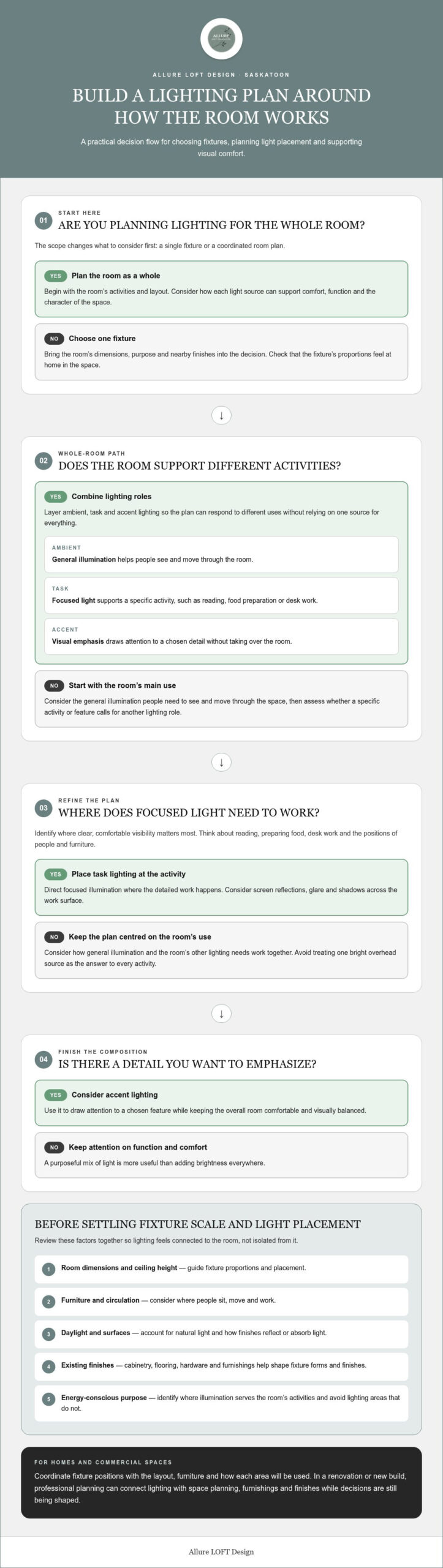
For a single fixture, bring the room’s dimensions, purpose and nearby finishes into the decision. For a whole-room plan, start with activities and layout, then consider how each source contributes to comfort and character. That distinction makes a Saskatoon lighting store visit more purposeful and helps the final choices feel considered, from the first glow to the overall composition.
How Saskatoon Lighting Plans Balance Ambience and Function
A considered lighting plan combines sources so a room can support its activities without relying on one fixture to meet every need. The right balance depends on how the space is used, its dimensions, the daylight it receives and how its surfaces reflect or absorb light. These details also shape how much artificial light is useful at different times of day.
Energy-conscious planning starts with purpose: identify where illumination is needed and avoid lighting areas that don’t serve the room’s activities. The U.S. National Park Service’s Principles of thoughtful lighting design address outdoor lighting, but the ideas of using light deliberately and directing it where it serves a purpose can inform indoor choices too. A refined plan considers both the atmosphere a room calls for and the resources its lighting uses.
Ambient, task, and accent lighting explained
Ambient lighting provides a room’s general illumination, helping people see and move through it. Task lighting focuses on a specific activity, such as reading, food preparation or desk work. Accent lighting draws attention to a chosen detail, adding visual emphasis without taking over the room.
These roles can be combined to suit the way a space changes through the day. In a kitchen, general illumination can serve the room as a whole, focused light can support work at a counter, and a restrained accent can add definition to a feature. The aim is a purposeful mix, not excess brightness everywhere.
Light placement for homes and commercial spaces
Light placement supports visual comfort by directing illumination where it is useful while limiting glare, harsh contrast and distracting shadows. Consider furniture positions, circulation routes and the activities that take place in each area. A fixture that conflicts with a seating arrangement can be uncomfortable, while a poorly lit route may make movement through the room less clear. Reviewing placement in relation to the layout helps each source feel intentional.
In a commercial space, lighting should respond to work activities, the movement of staff and visitors, and the atmosphere the business wants to convey. A reception area, workstation and meeting space may each call for different priorities. Coordinating fixture positions with furniture and circulation can support comfort and productivity while giving the interior a coherent character. Lighting decisions work best alongside commercial space planning in Saskatoon.
For homes and businesses, a thoughtful plan can bring atmosphere, function and deliberate energy use into closer alignment. Explore how curated lighting and interior design guidance can connect these decisions with the purpose of your space.
Choosing Saskatoon Lighting by Room, Scale, and Style
Start with what each room needs to support, then consider fixture style and proportion. A living room may shift from conversation to reading, while a kitchen has work surfaces that call for clear, focused illumination. The right choice depends on these activities, the room’s dimensions and its existing design, not simply on whether a fixture looks appealing on its own.
Matching lighting to the way each room is used
In living and dining areas, a mix of general and focused light can support different moments, from hosting guests to quiet reading. A kitchen or home work area benefits from light directed towards the surfaces where tasks take place. For a reading corner, consider how the light reaches the page and whether the source could cause glare from a seated position.
Bedrooms call for a balance between practical routines and a restful mood. General illumination can help with dressing and tidying, while a more focused source near a reading spot supports evening use without lighting the entire room as strongly. These are design considerations, not fixed prescriptions. The room’s layout and the people using it should guide the plan.
| Room purpose | Lighting need | Design consideration |
|---|---|---|
| Living or dining | Flexible light for gathering, dining or reading | Relate fixture scale to the room and furniture arrangement |
| Kitchen or work area | Focused illumination for practical tasks | Direct light towards work surfaces while considering shadows |
| Bedroom | General light for routines and softer light for winding down | Coordinate sources with bedside furniture and room use |
| Reading corner | Focused light near the chair or reading position | Check sightlines and avoid an uncomfortable source of glare |
Creating cohesion with finishes and furnishings
Proportion matters. Ceiling height affects how a fixture relates to the space overhead, while room dimensions and furniture scale influence whether it feels balanced or visually dominant. Consider the fixture in context: a dining table, a living room seating group and nearby architectural details all help establish its appropriate presence. Careful light placement can make the composition feel intentional and keep circulation areas clear.
Next, look at colour, material and finish alongside the interior’s existing palette. A fixture can echo a finish already present in cabinetry, hardware or furniture, or introduce a restrained contrast that adds definition. Repeating every finish isn’t necessary. Shared proportions, forms or tones can create a consistent design direction, while variation adds character without disrupting visual harmony.
Before visiting a Saskatoon lighting store, note the room’s purpose, measure its dimensions and ceiling height, and consider which furniture and finishes will remain. Photographing the space and its existing finishes can also help you assess options in context. These observations make fixture choices more purposeful and connect practical requirements with the style of the wider interior.
Planning a Saskatoon Lighting Purchase for a Renovation or New Build
Lighting decisions are easier to coordinate when they’re part of the project plan, rather than a final choice made after the room’s layout and finishes are settled. A clear sequence connects what each space needs with furniture plans, natural light and the wider design direction. It also gives a visit to a Saskatoon lighting store a defined purpose: selecting fixtures that belong to the plan, rather than choosing them one at a time.
A practical sequence for planning lighting
Begin with how each room will be used, then build the lighting decisions around that information. These steps can help organize the process:
- List activities by room. Note where people will read, prepare food, work, gather or relax, and identify where focused or general illumination will be useful.
- Record the existing conditions. Note windows and the natural light they provide, along with current furniture, cabinetry, flooring and other finishes that will remain.
- Map the furniture layout. Mark key seating, tables, work surfaces and circulation paths. This makes it easier to consider light placement in relation to how people will use the room.
- Set the design direction. Consider how fixture proportions, forms and finishes will relate to the room’s architecture and furnishings.
- Coordinate with project decisions. Review lighting alongside renovation or new-build plans so choices stay connected to the intended layout and overall interior.
When setting a lighting budget, account for the fixtures themselves, any compatible bulbs or controls where applicable, and electrical work as separate project considerations. The final amount depends on the fixtures and scope selected. This sequence makes selection more intentional without assuming that every room needs the same approach, and brings lighting into the conversation while design decisions are being coordinated.
Lighting considerations for Saskatoon homes and businesses
In Saskatoon, daylight changes through the seasons, so consider how a room feels at different times of year and day. A space that receives strong natural light at one time may depend more on planned fixtures at another. Think about the room’s orientation and windows, and how finishes and furnishings affect the quality of light indoors. The aim is a plan that feels considered across everyday conditions, not only at one moment.
For a commercial space, begin with the work being done and the experience intended for staff, customers or visitors. A reception area, focused work zone and meeting space may each call for different lighting priorities. Relating fixture choices to circulation, furniture and the character of the business supports a coherent environment for comfort and productivity.
Professional planning can bring these considerations together with furniture, finishes and the broader project direction. Explore Allure LOFT Design to consider curated lighting as part of a thoughtfully planned home or commercial interior.
Explore Curated Lighting with Allure LOFT Design in Saskatoon
Lighting may seem like a small decision within a larger project, yet it influences how the finished interior looks and works. Allure LOFT Design is a Saskatoon-based interior design firm offering curated lighting and Furniture, Fixture & Equipment (FF&E) procurement. This connects fixture selection with the furnishings and design choices around it, so homeowners and businesses can consider lighting as part of a cohesive interior rather than a separate purchase.
A Saskatoon lighting store experience informed by design considers more than a fixture’s appearance. It asks how the light will serve the room, how the fixture relates to its proportions, and whether its form and finish complement the wider design direction.
How curated lighting fits into interior design
Lighting choices can reinforce a room’s character while serving its everyday purpose. A fixture’s scale and finish may relate to furniture, cabinetry or other interior details, while its placement supports how people use the space. Considered together, these elements help create an atmosphere that feels composed, whether the goal is a comfortable home setting or a focused place to work.
This coordination is part of a larger design process. Space planning, furnishings and finishes all influence how lighting fits within the completed interior. Understanding the interior design process can help clarify how fixture selection relates to broader decisions, from establishing project needs to shaping a unified result.
Lighting guidance for residential and commercial projects
Residential lighting responds to the rhythms of home life: preparing meals, relaxing, reading or welcoming guests. A commercial space has its own priorities, shaped by work activities, circulation and the experience intended for staff and visitors. In both settings, the plan should reflect how people use the space, though the balance of practical needs and atmosphere will differ from project to project.
Allure LOFT Design brings lighting into its interior design work and FF&E procurement, considering fixture choices alongside the needs and direction of each project. This integrated perspective connects light placement with furnishings, finishes and the intended use of a room. The firm has a 5 out of 5 rating, a trust signal for readers considering design guidance as part of their project.
For a home refresh, renovation or commercial interior, curated lighting can support comfort, productivity and visual harmony. Explore Allure LOFT Design and plan lighting as part of a thoughtfully designed space.
Make Your Next Lighting Decision With Intention
Begin with the room you’re ready to shape and the experience you want it to offer. Perhaps you’re creating a quieter place to unwind, a welcoming setting for guests or a focused environment for work. Naming that intention gives your next lighting decision a clear starting point and connects practical needs with the character you want the space to express.
A thoughtful Saskatoon lighting store experience can help turn an initial idea into a cohesive design direction. Consider how lighting can support the way you live or work, then explore curated lighting and design with Allure LOFT Design. Start planning a space that feels considered, comfortable and distinctly yours.
Frequently Asked Questions
Where can I find a Saskatoon lighting store for a renovation?
For renovation lighting in Saskatoon, start by identifying which existing fixtures will remain and what the updated rooms need to support. A floor plan or room photographs can make the design discussion more concrete. Allure LOFT Design offers interior design guidance and curated lighting as part of a renovation plan. Explore its design guidance to connect fixture choices with the wider interior.
How do I choose the right light fixture for a room?
Before making a selection, measure the room and ceiling, photograph finishes in daylight, and consider how the fixture will look from the places you usually sit or stand. A fixture should feel proportionate from those everyday viewpoints, not only in a product image. Also consider whether its appearance complements the room’s character and supports the activities you expect it to serve.
Can lighting make a small room feel more comfortable?
Considered lighting can help a compact room feel more balanced and useful, though it won’t change the room’s actual size or guarantee a particular visual effect. View the space at different times of day and notice whether a light source feels intrusive from the sofa, desk or doorway. Keeping fixture proportions in relation to furnishings can help the lighting feel integrated rather than visually crowded.
What is the difference between ambient, task, and accent lighting?
Ambient lighting provides general illumination, task lighting focuses on an activity, and accent lighting brings attention to a selected detail. In an entry, general light helps with arrival and movement, focused light can help someone check a bag or keys, and accent light may give a framed piece more presence. These roles can work together, allowing the entry to serve practical needs while retaining its own character.
Should lighting be planned before a renovation begins?
It’s helpful to consider lighting early enough to include it in the renovation’s design decisions. Make a short list of what will stay, what will change and which rooms are part of the project. That gives your design team a clearer basis for discussing fixture locations and the intended look. Timing depends on the project’s scope, so include lighting in professional planning rather than treating it as an afterthought.
Can a lighting plan support productivity in a Saskatoon workplace?
A considered lighting plan can contribute to a comfortable workplace, though it cannot guarantee a particular productivity result. Walk through a typical workday and note where staff read, meet, use screens or welcome visitors. These observations reveal where lighting needs to respond to different activities and how the workplace should feel. Discussing those needs alongside the business’s layout helps connect the employee experience with the impression made on visitors.