
What if the right accessory could make a room feel more complete without adding more clutter? If you’re searching for home accessories Saskatoon homeowners can choose with confidence, the challenge isn’t finding another decorative object. It’s finding pieces that suit your space, support everyday life and feel connected to what you already own.
It’s easy to be drawn to a beautiful accent and still wonder where it belongs, whether it will last, or how it will sit alongside familiar furnishings. Thoughtful choices can bring a home together without requiring a complete refresh. This guide will help you weigh function, proportion, material and personal style, so each addition has a reason to be there.
You’ll find practical ways to choose accessories for the rooms you use every day, build a cohesive look from what you already have and consider durability and sustainability along the way. For a local, design-minded perspective, Allure LOFT Design provides residential interior design in Saskatoon, with an approach centred on refined aesthetics, eco-conscious materials and the people who live in the space.
Key Takeaways
- Start with what the room needs, then account for its dimensions, existing finishes and available space before considering new pieces.
- Compare accessories by purpose, placement, material and care needs to see which options suit your daily routines.
- Use room photos, measurements and a clear shortlist to make shopping for home accessories Saskatoon more focused and intentional.
- Choose accents that relate to your current furnishings through colour, texture or form, creating a cohesive look without replacing everything.
- Consider Allure LOFT Design’s residential interior design services when you want a refined, eco-conscious approach to shaping your home.
Why Home Accessories in Saskatoon Deserve a Thoughtful Approach
In a considered interior, the smallest choices can shape how a room feels and works. For anyone exploring home accessories Saskatoon, the aim isn’t simply to fill an empty shelf. It’s to select objects that bring comfort, usefulness and personal character to the spaces you already have.
Home accessories are movable decorative or functional objects that complete a room by supporting its use and contributing colour, texture or personal expression. This concise definition distinguishes them from the larger pieces and permanent elements that establish a room’s structure. A well-placed mirror, for example, can be practical and visually expressive; a vessel may hold flowers or stand on its own as a sculptural accent.
What counts as a home accessory?
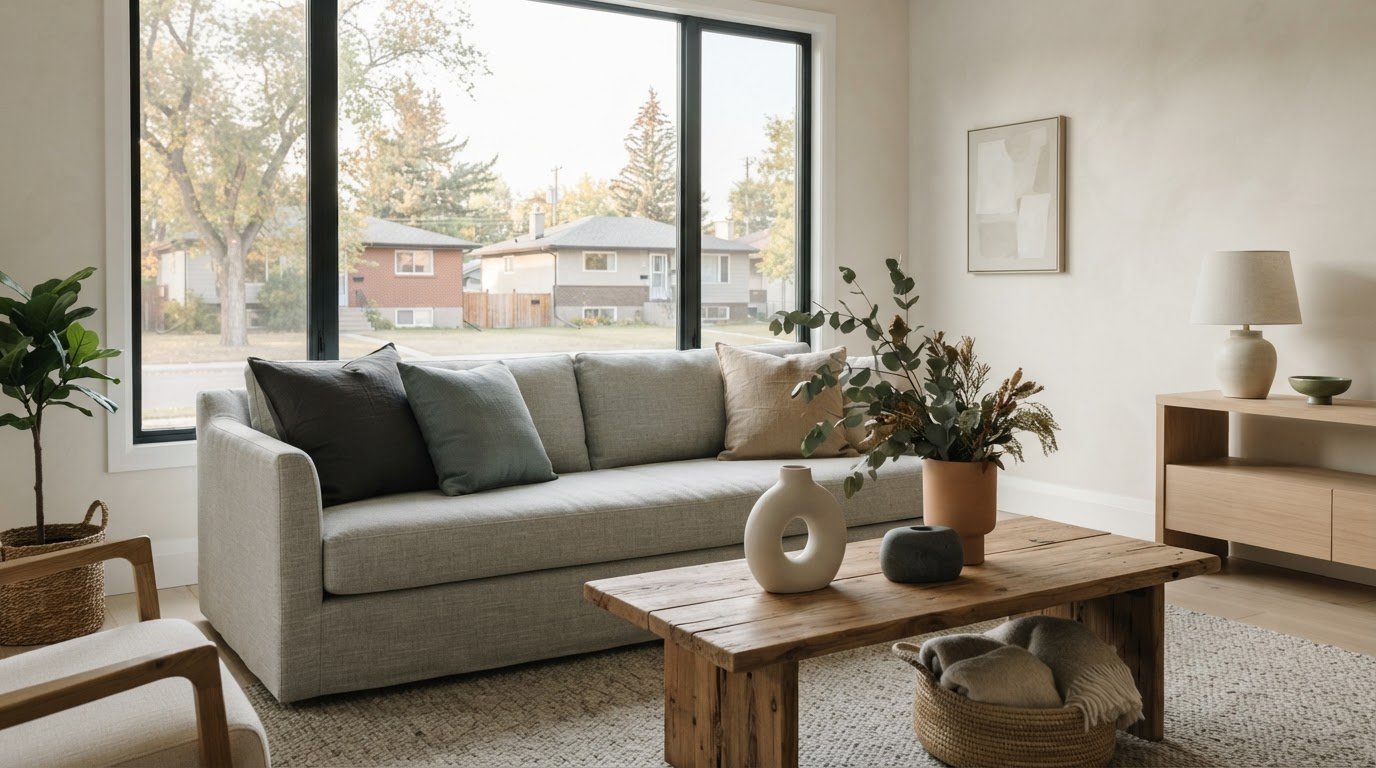
Cushions, vessels, mirrors, artwork and tabletop pieces are familiar examples. Some are primarily decorative, while others serve a daily purpose. A tray can gather items on a coffee table, a mirror can help with getting ready, and a cushion can add comfort as well as colour. The category also includes movable accents such as textiles and smaller decorative objects. For a broader overview of their role in interiors, see Understanding Home Accessories.
Accessories differ from furniture, cabinetry and fixed architectural elements. A sofa provides the main seating; a cushion adds softness and detail. Built-in cabinets and permanent finishes help define a room, while a vessel or artwork can be repositioned as needs change. This distinction matters because accessories can refresh the atmosphere without requiring a larger renovation or the replacement of foundational pieces.
Why function matters as much as appearance
A room’s purpose should guide what earns a place in it. In a living room used for conversation, a small tabletop piece can help keep frequently used items together, while cushions can make seating more inviting. In a bedroom, soft textures and a carefully chosen bedside accent can support a calmer routine. In an entertaining space, a serving vessel or tray may be both useful and visually at home.
Visual harmony is more than matching colours. Consider whether an object’s shape, texture and scale feel comfortable in the room, and whether it supports the way you move through and use that space. An attractive piece that obstructs a surface or requires more care than your routine allows may not be the right choice. An accessory that serves its purpose and relates naturally to its surroundings is more likely to feel lasting rather than incidental.
Thoughtfulness also supports a more sustainable approach. Choosing fewer, well-made objects that you genuinely use or value can help avoid a cycle of short-lived, unplanned additions. Reflect on what the room lacks, what already works and which details feel personally meaningful. The result can be a home that feels more complete without feeling crowded: expressive, comfortable and shaped around everyday life.
How to Choose Saskatoon Home Accessories for Your Space
A thoughtful choice starts with the room, not the object. An accessory should fit the room’s purpose, available space and visual character. This simple principle helps narrow the options, whether you’re considering home accessories Saskatoon shops carry or assessing a piece you already own. Instead of asking only, “Do I like it?”, consider how it will live alongside your furnishings and support the way you use the room.
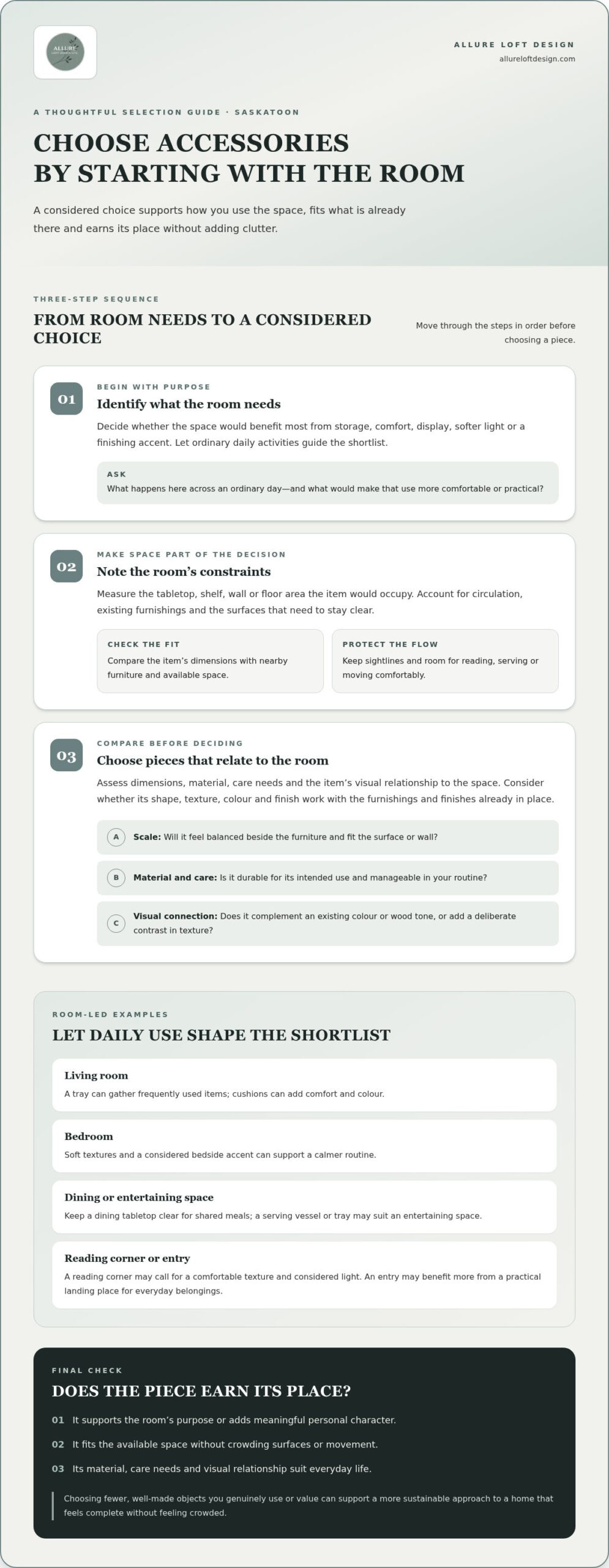
Follow this sequence before choosing:
- Identify the room’s needs. Decide whether the space would benefit most from storage, comfort, display, softer light or a finishing accent.
- Note the constraints. Measure the relevant tabletop, shelf, wall or floor area, and consider circulation, existing furnishings and the surfaces that need to remain clear.
- Compare suitable pieces. Look at dimensions, material, care needs and visual relationship to the room before deciding what earns a place.
Start with the room and its daily use
Think about what happens in the space across an ordinary day. A dining area used for shared meals may need a clear tabletop, while a reading corner might call for a comfortable texture and a considered source of light. In an entry, a practical landing place for everyday belongings may matter more than a decorative object. Let the room’s real activities guide your shortlist.
Then look at the furnishings and finishes already in place. Existing colours and textures offer context, not a rule that everything must match. A new accent can complement a wood tone, repeat a colour in artwork or introduce a contrasting texture that feels deliberate. The aim is a visual relationship, not a set of identical pieces.
Assess scale, material and visual relationship
Compare an item’s dimensions with the furniture around it and the space it will occupy. A broad artwork may feel balanced above a substantial console but overwhelm a narrow wall; a small vessel can disappear on a large surface. Consider sightlines and function, too. An object shouldn’t crowd the area needed for reading, serving or moving comfortably through the room.
Material, texture, colour and finish all affect how an accessory sits within an interior. A woven surface can soften a room with smooth finishes, while a polished object may add contrast among matte textures. For a more eco-conscious decision, consider whether the material is durable, suits its intended use and can be cared for over time. Natural materials such as wood, linen or stone may appeal, but the best choice depends on the item’s construction, upkeep and place in your home. Avoid assuming a material is sustainable based on appearance alone; weigh its usefulness and expected longevity.
Keep the final choice personal. If you’re refining a room and want a design-minded local perspective, explore Allure LOFT Design’s residential interior design services as part of your planning. A thoughtful design process can help you consider how details relate to the furnishings, finishes and routines already in your home.
Compare Home Accessory Choices by Purpose, Material, and Longevity
Once you have a shortlist, compare each piece against the same practical questions: What will it do? Where will it sit? How will its material suit the room and its care routine? This makes choices easier to weigh than appearance alone, whether you’re browsing home accessories Saskatoon retailers carry or considering items already in your home. The goal isn’t to make every object functional. It’s to understand the role each one will play.
Decorative pieces and practical accents
Some accessories are chosen mainly for their visual character. Artwork, a distinctive vessel or a sculptural tabletop object can add colour, shape or a personal point of view. Other pieces contribute directly to daily use: a mirror supports getting ready, textiles can add softness, and a storage-oriented accent can help keep everyday items together. Mixed-purpose objects do both. The right balance depends on the household, the room and the amount of space available.
Use this comparison to weigh different options. Material examples are prompts for consideration, not claims about a particular product’s sourcing or environmental impact.
| Purpose | Possible placement | Material considerations | Care needs to consider |
|---|---|---|---|
| Decorative artwork | Wall space suited to its scale and subject | Surface, frame and finish in relation to nearby textures | Dusting and protection from direct sunlight, where relevant |
| Practical mirror | Entry, bedroom or another place where it supports a routine | Reflective surface and frame finish alongside existing furnishings | Cleaning the glass and keeping the frame in good condition |
| Textile accent | Seating or a bed where added softness is useful | Texture, weave and suitability for the level of everyday use | Cleaning instructions and how readily it can be maintained |
| Vessel or tabletop accent | A shelf, console or table with enough space around it | Weight, surface finish and how the form relates to nearby objects | Whether it needs regular cleaning or careful handling |
| Storage-oriented accent | A surface or area where small items tend to gather | Construction and finish suited to frequent handling | Ease of wiping, organizing and returning items to their place |
Materials, care and long-term fit
Before deciding, picture how often the piece will be handled and what care you’re realistically prepared to give it. An object used daily may need a different finish or construction than one displayed out of reach. Read care guidance and consider whether the material’s upkeep fits your household. A beautiful surface that needs more attention than you can give may be less suitable than a simpler piece that works comfortably in everyday life.
Longevity is part of thoughtful selection, but no material or finish is automatically sustainable simply because it looks natural or understated. Consider the item as a whole: its intended use, durability, care requirements and whether you expect it to remain useful as your needs evolve. A durable choice may support a more lasting interior by helping you avoid replacing pieces that no longer serve their purpose. That’s a considered decision, not a promise of savings.
Let the comparison clarify what matters most. A primarily decorative piece can be worthwhile if it has meaning and fits the room; a practical accessory can still bring visual warmth. Select with purpose, and allow the mix to reflect how your home is lived in.
Practical Plan for Home Accessory Shopping in Saskatoon
A little preparation can turn browsing into a focused search. Before looking for home accessories Saskatoon homes can benefit from, make a brief that keeps the room, its existing furnishings and your priorities in view. This helps you compare each option in context rather than being swayed by an appealing object that may not suit the space.
Prepare a useful brief before browsing
Begin with the room’s purpose and the area you’d like to improve. Note the feeling you want to create, whether that’s calm, welcoming or more expressive, and identify the practical need behind the change. A clear priority, such as adding useful storage or bringing warmth to a bare surface, gives your search direction.
- Take room photos. Capture the area from more than one angle, including nearby furnishings and finishes, so you can judge a potential piece against its surroundings.
- Record measurements. Measure the wall, surface or floor area where an accessory might go. Note nearby doors, walkways or objects that affect placement.
- List existing finishes. Jot down prominent colours, materials and textures, including details that may be less obvious in a photograph.
- Write down intended use. Decide whether the piece should solve a practical need, add visual interest, or contribute to both.
Keep the brief concise. A few clear priorities are more useful than a long wish list that makes every option seem equally important.
Make a considered shortlist
Compare each candidate using the same criteria: purpose, material, scale and care. Ask whether its dimensions suit the intended spot, whether its finish relates comfortably to the room, and whether its upkeep fits your routine. Then consider personal preference. A piece can meet practical requirements and still feel like the wrong choice if it doesn’t reflect the character you want at home.
Review options beside your room photos or, if you’re shopping in person, picture the whole setting rather than judging each item alone. Consider how a prospective accessory will sit alongside the furnishings already there. It doesn’t need to match them exactly; it should contribute to a coherent overall impression. For broader inspiration, the ideas explored in contemporary home design in Canada can help you notice how current expressions of style work with personal details. Thinking about the interior design process as a sequence of decisions can also make the shortlist feel more manageable.
Once you’ve narrowed the choices, pause before adding another item. Does it address a priority? Is its scale appropriate? Can you imagine it remaining useful or meaningful as the room evolves? That final check helps keep shopping intentional. For a locally grounded perspective, explore residential design with Allure LOFT Design, where refined aesthetics and considered details inform the approach to shaping a home.
Discover Allure LOFT Design’s Curated Home Accessories in Saskatoon
Finding the right finishing pieces is easier when they’re considered as part of the home, not as isolated purchases. Allure LOFT Design is a Saskatoon-based interior design firm offering residential design, commercial design and full-service interior design from concept to completion. Its design approach connects refined aesthetics with eco-conscious materials and solutions, helping keep decisions purposeful and centred on the people who use each space.
A design-minded approach to household products
Accessories can contribute to a broader residential design vision by relating to the room’s furnishings, materials and character. A considered selection can bring cohesion to an interior while still making room for personal preferences. The aim isn’t to impose a single look, but to think carefully about how each item may suit the home and the people living in it.
That perspective is especially useful when you’re drawn to several pieces but aren’t sure how they’ll work together. Consider how an accessory relates to what’s already in the room, whether it has a practical role, and whether its material and care needs make sense for your household. Eco-conscious choices are part of this reflection: usefulness, durability and thoughtful selection matter, without assuming that a particular material or appearance proves a product’s environmental credentials.
Allure LOFT Design’s residential design approach recognises the importance of personal context. Client testimonials describe interiors as elegant and personal, as well as attentive communication. These comments speak to residential design experience, not to reviews of individual accessories. They reflect a client-centred process in which the home and its occupants remain central to design decisions.
Take the next step with Allure LOFT Design
As you explore home accessories Saskatoon residents can bring into their spaces, keep your own routines and preferences at the centre of each decision. A well-considered piece should feel at home with the furnishings around it and make sense for the way you use the room. Sometimes that means choosing a functional accent; sometimes, it means selecting an object that carries personal meaning and adds a distinct note to the interior.
Allure LOFT Design provides residential interior design in Saskatoon, with an approach that values refined aesthetics, eco-conscious solutions and thoughtful details. Consider your room, needs and existing furnishings as part of the design process, and let those details guide choices that feel right for your home.
Let Your Home Take Shape, One Considered Choice at a Time
A home doesn’t need to be finished all at once. A thoughtful accessory can mark the beginning of a room’s next chapter, reflecting how your routines and tastes evolve while respecting the pieces that already feel like yours. As you explore home accessories Saskatoon has to offer, give yourself permission to choose gradually. The right addition is one that feels at ease in your home, not simply one that fills a space.
Let your preferences lead, with function and lasting appeal as steady guides. Allure LOFT Design offers residential interior design in Saskatoon, grounded in a refined, sustainable approach. Explore Allure LOFT Design’s interior design services and find inspiration for the details that can make your space feel more personal.
Small, intentional choices can help a home feel more distinctly yours.
Frequently Asked Questions
Can I mix vintage and contemporary home accessories?
Yes. A vintage frame can sit comfortably with contemporary pieces if you create a clear visual connection, such as a shared finish or a similar sense of scale. Try grouping items by their visual weight, rather than arranging them by age, and let one piece take the lead. Step back and view the arrangement from the room’s entrance; that perspective can reveal whether the mix feels deliberate.
What home accessories work well in a small Saskatoon condo?
Choose pieces that make a useful contribution without demanding more room than they earn. A mirror placed where it reflects an existing view, or a compact lamp on a surface you already use, can be more helpful than several small accents competing for space. If you’re comparing home accessories Saskatoon has to offer, bring a photo of your condo’s tightest area and consider how each option affects movement through it.
Is a sustainable home accessory always made from natural materials?
No. A natural-looking surface alone doesn’t establish how a product was made or how long it will serve you. Consider whether the piece addresses a genuine need, suits its intended use and seems durable enough for your household. Product-specific information can help you assess those points; avoid relying on a material’s appearance as proof of environmental benefit. A thoughtful choice is one you can use and care for over time.
How should I care for home accessories made from natural materials?
Follow the care instructions for the specific item and finish. If you’ve misplaced them, look for product documentation before applying a cleaner or treatment, since an approach that suits one surface may damage another. Consider where the accessory will sit, too: placement near a window, heat source or area exposed to splashes may affect its upkeep. Keeping care information with household records makes it easier to refer to later.
Can home accessories refresh a room without replacing the furniture?
Yes. You can change the room’s emphasis while keeping its main furnishings in place. Try temporarily moving a few existing objects from another room, or rearranging a shelf or tabletop before purchasing anything new. This small edit can help reveal what the space is missing, whether that’s a stronger focal point or a quieter arrangement. Live with the change briefly, then decide if an additional piece would genuinely improve it.
What home accessory makes a thoughtful housewarming gift?
A thoughtful gift reflects the recipient, not just the latest trend. If you know they enjoy hosting, a distinctive serving or tabletop accent may suit their routines; if you know their interests, an object connected to them can feel especially personal. For a home you haven’t seen, avoid pieces that depend on exact dimensions or a particular colour scheme. A note explaining why you chose it adds a personal touch without assuming their style.